Category Archives: Interview

Hit Channel Interview with Steve Hillage

We had the great luck to talk to a great psychedelic rock guitarist, a successful producer and ambient techno cult hero: Steve Hillage. He’s very busy with his ambient techno band, System 7 and has also recorded with Gong, Khan (with Egg’s Dave Stewart), Mike Oldfield, Soft Machine’s Kevin Ayers, The Orb, Ozric Tentacles and Hawkwind’s Nik Turner. His solo albums were produced by rock giants like Pink Floyd’s Nick Mason and Todd Rundgren. During ‘80s he produced records for Simple Minds, It Bites, Murray Head, Nash The Slash and Robyn Hitchcock among many. Read below the very interesting things he told us:

Are you satisfied with the feedback you got so far from fans and press for “UP” album?

I’m very happy with it. I’m very satisfied with “UP”. It’s a very good follow-up of the previous System 7 album, “Phoenix”.

Is there any particular concept that connects the songs of “UP”?

Well, the main thing is that we spent a lot of time in Berlin, and do quite a lot of work and some songs for this album with A Guy Called Gerald. He was one of the beginners of acid house here in UK and now lives in Berlin. He’s a well-known figure in UK dance music. We spent a lot of time with him and we wrote some tracks with him. One thing I found very nice about the Berlin thing, is that its music is very happy and joyful. It’s not like the ‘90s when techno was very dark and moody. He wanted it more joyful and he experienced it when he went in psychedelic trance area. I found in Berlin a joy that I was missing, that’s why I called the album “UP”. It’s UP-lifting. Not like cliché trance music. More on the techno side of things.

Did you try anything for the first time during the recordings of “UP”?

We worked with A Guy Called Gerald for the first time. We wrote tracks in Berlin, we had never done that before. But technically, it’s just a sort of learning new little tricks and trying some little things. We did remixes, which is a progression. No hugely great forward, technically.

Did you enjoy the making of Gong’s “2032” album (2009)?

Yes, very much! It was a very-very enjoyable experience. In a way, it was a follow-through from the Uncon Festival in Melkweg, Amsterdam in November 2006, which was a very wonderful event, very joyful.

Are you proud of Gong’s “Radio Gnome Invisible” trilogy (“Flying Teapot”, “Angels Egg”, “You” albums)?

Yes, I played on “Flying Teapot” and I did some part of the writing on “Angels Egg” and “You”.

Do you still like these albums? These are classic ones.

Yes, classic Gong albums. I do like them. These are wonderful albums. I’m very proud of them.

Do you remember any funny/unknown/unexpected story or trivia from the sessions of Kevin Ayers’ “Bananamour” album?

Oh, that was very long time ago!! We had a great time. The most important event that happened in my period with Kevin, was meeting through Kevin’s band, Gong. We had a jam session, Kevin and I, with band members of Gong, including (ed: saxophonist and flautist) Didier Malherbe in December 1972. And the jam went so well, that I kind of changed bands because if this gig.

Do you consider as one of the highlights of your career the live-in-the-studio performance of Mike Oldfield’s “Tubular Bells” album for BBC?

I think it’s a high point. One of many. I enjoyed working with Mike. We were sharing the studio with him when we did “Flying Teapot” album for Gong. We were working on “Flying Teapot” and he was working on “Tubular Bells”. The story started from the beginning in 1973.

How difficult was to have Todd Rundgren and Nick Mason (Pink Floyd drummer) as producers in your “L” and “Green” albums?

How did we get them doing? They expressed some interest in working with me and arranged this to be made. We had a contact with Nick from the last Gong album I was involved, “Shamal” (1975). He co-produced that. The Gong album after Daevid Allen left. I had also a small involvement in “Shamal” because that happened when I was leaving Gong myself.

Do you miss your Ladbroke Grove days?

This is the area where I’m speaking to you now. I live in this area since 1972.

Can you describe us these UK Underground days (International Times newspaper, The Deviants, Hawkwind)? You did some albums with Nik Turner from Hawkwind, too.

Notting Hill was quite important in UK psychedelic underground. But also we had a strong West Indian presence, which now we are celebrating in Notting Hill Carnival. But it was also a big place for punk. The Clash came from Notting Hill. Killing Joke were based here. They are good friends of mine. I had a partnership with Youth, one of the members of Killing Joke (ed: and great producer too). Notting Hill is an important part of London.

How adventurous was the transition from a psychedelic/progressive rock guitarist into an ambient techno musician?

For me, it was a very obvious transition. The ‘70s progressive rock musicians don’t understand it, I don’t know why. For me, it was completely normal in nature. From the ‘80s the psychedelic rock almost died out and the psychedelic art scene from the mid ‘80s moved towards electronic scene. Even from the early ‘80s. So, I went then with the flow. Along with a few other people, but not that many. I’m constantly surprised about how few other psychedelic rock musicians who were active in the ‘70s, made that transition, and I don’t understand that. It is the way it is. I do it from my heart and I love it.

Do you think Pink Floyd’s “Ummagumma” studio album (1969) is one of the first ambient records in music history?

To a certain extent. It’s quite rocking as well. It’s a great-great psychedelic album. I love it! I’m really into «Several Species of Small Furry Animals Gathered Together in a Cave and Grooving with a Pict». That’s ambient, he-he (mad laughs) !!!!!!

Are you happy with the triumphant return of LP format?

Obviously, I don’t believe there is a vinyl revival in dance music, because vinyl was always used in clubs for mixes by the DJs . When we did Gong’s “2032” album, we made a deluxe vinyl version on 180-gram vinyl. I did a very interesting comparison in the studio: I set up a vinyl deck really well and I compared the vinyl test pressing with the absolutely digital first generation technology. It sounded different, but it sounded better. In some ways, I really liked it in some tracks. I think vinyl is an unusual format these days. I didn’t like it for (ed: his solo) “Rainbow Dome Musick” ambient record from 1979. I think it sucked on vinyl. I hate it on vinyl. Because of its scratch, I couldn’t hear it. But I enjoyed “Rainbow Dome Musick” when I got it on CD. For music with drums and beat, I think it wasn’t that good thing.

Would you like to do an album with Brian Eno?
I know Brian Eno, I know him quite well. I worked with him, with an Algerian artist called Rachid Taha, on several tracks (ed: for Rachid Taha’s “Tékitoi” album, 2004). I did some gigs with him. I ‘m not sure if we can make an album together. I don’t think that could work very well making an ambient album together. We had a slightly different approach. But when we come together we have a shared love for Arab music.

Is there anyone you’d like to work with and hasn’t happened yet?

I ‘d love to do a track with Jeff Mills, the Detroit techno legend. Many years ago, I wanted to work with Peter Gabriel (Genesis), but I think now he’s very slow. It seems to take about 10 years to make a track. It’s frustrating that he’s bored.

Bob Ezrin (Pink Floyd, Alice Cooper, Kiss, Peter Gabriel producer) told me that “in Peter’s world things can take a very, very long time”.

(Mad Laughs) I love him, I love Peter Gabriel, but I don’t know if I could work with him!! He’s too slow.

Have you ever rejected an offer and then regretted it?

Nothing major.

Do you think rock’n’roll is dead and everything now is about managers, contracts and percentages?

That’s a good question! In ‘60s and ‘70s was all about managers and contracts. I think now, despite all the problems with free downloading and the music on the Internet and the value of music declining, it’s actually easier now for an artist to take control and running a career without being extorted by managers and agents. So, I think in some ways, things look better now than they were. Nearly everybody in ‘60s and ‘70s was exploited on cloudy contracts. We were. All these contracts in Virgin Records were terrible. Now, that we release our stuff through our own label, it’s fantastic. We release System 7 and Mirror System on A-Wave. We release Gong’s “2032” album on an exceptional A-Wave label, called G-Wave. This is the first Gong album that all the consisting members were paid royalties. Everyone was paid royalties. We made a profit. Now we have the “Steve Hillage Band live at Gong Uncon event”, which now we are re-releasing it. It came out first on first printing in 2009, now we are giving it a full release on G-Wave. We release it on 10th September and it’s on our label. We are in control and it’s great.

Do you think you should have received more recognition for your work all these years?

I don’t know, because I didn’t really play the rock ’n’ roll guitar hero game. I didn’t like it. Because I didn’t play that game, I was very free. I’m happy about that really. That is one of the reasons I moved into the electronic sphere.

You are in the music industry all these years. Do you think money and fame change a person? You know Sting for years, too.

I always found him a nice guy. I haven’t seen him for a few years. If you had an astonishing amount of money, obviously that could change your perspective of life. Because you don’t have the need to work tomorrow. That would change anyone’s perspective, as if you would win 100 millions on a lottery. The best way is to keep working on something you enjoy doing. To keep out your creativity working without being told what to do. I’m happy to do that for more than 40 years. That’s worth for me more than money..

Who are your influences as a producer?

George Martin (The Beatles producer) and Trevor Horn (Yes, Paul McCartney). From the persons who produced my albums, I learned a lot from Malcolm Cecil and Nick Mason. I think music is far beyond producing. My number one hero is Jimi Hendrix. All levels.

What kind of music are you listening to this period?

I’m listening mostly dance music. There is a great new record that is coming out by The Orb with Lee “Scratch” Perry, the legend of dub reggae. It’s fantastic. Alex (ed: Paterson, The Orb) played me some tracks last week and sounded fantastic.

Is there any cover you’d like to do?

In the next Steve Hillage album I wish to do some more covers. I ‘d like to do “Love My Way” from The Psychedelic Furs. Todd Rundgren was their producer.

You’re really into ‘80s music.

Yes, some good thing happened during the ‘80s. I didn’t produce many albums for my own, I produced many records for other artists: Simple Minds, It Bites, Murray Head, Robyn Hitchcock. I put up a lot of new musical knowledge in the ‘80s. For some people, wasn’t a good period, for me it was great the ‘80s.

Do you like Depeche Mode?

I do. I respect them. It’s a very important band.

I don’t like them. I think Depeche Mode and U2 are overrated bands.

No, no, no. I don’t think so. “Everything Counts (In Large Amounts)” (ed: Depeche Mode song) is brilliant.

U2 had always great producers. I don’t think they could do an album with the budget of a System 7 record.

Totally different things.

How possible is to play soon in Greece?

We need a Greek promoter to book us. I’m working on various projects. I would love to come with System 7. We are going to do another Steve Hillage Band tour in one year or two, if anyone is interested in booking us. There is another project I want to mention to you, called Phoenix Rising. It’s a collaboration between System 7 and a Japanese psychedelic rock band called ROVO. We play a mix of techno versions of ROVO tracks and ROVO live versions of System 7 tracks. It’s very interesting. We are going to write a new album in September. We are going to release the album next year and do a tour. Hope to come to Greece. System 7: Miquette (ed: Giraudy, the other half of System 7) and myself, and the ROVO band: two drummers, bass player, another guitarist, a really good keyboard player and an electric violin player, Yuji Katsui. He played on a few tracks on the last System 7 album and on Gong’s “2032” album. It’s very interesting the sound of his electric violin and my electric lead guitar, it’s a little bit like Mahavishnu Orchestra and John McLaughlin. Like a psychedelic electronic Mahavishnu Orchestra. You’ll hear about the project Phoenix Rising during next year.

A huge “THANK YOU” to Steve Hillage for his time and to Billy James for his valuable help.

Please check http://www.a-wave.com/system7
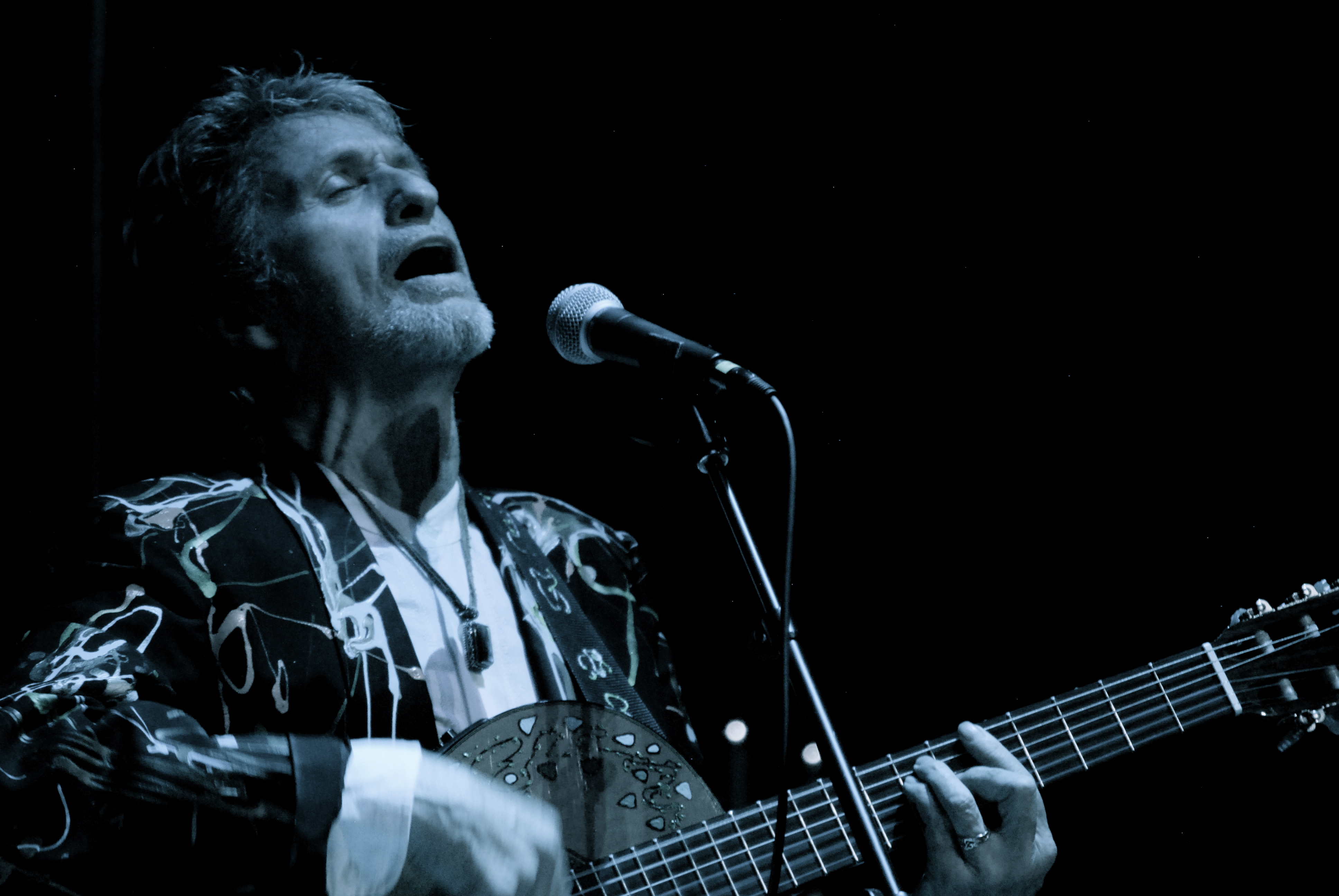
Source


Santa Cruz Patch Interview with Jon Anderson

5 Questions with former Yes singer Jon Anderson, who is Touring Solo
Anderson brings an artistic solo show to the Rio Theatre June 21.

By Brad Kava

With the band Yes, singer Jon Anderson has sold more than 50 million discs since the late 1960s and his band’s following has been so passionate, it has been written about as a religion.
Along with Pink Floyd and King Crimson, Yes is one of the cornerstones of progressive rock, a genre that infused classical and operatic sensibilities with rock. It told stories in long, elegaic songs miles and light years away from the three-minute singles that were the mainstay of popular radio, but not that far from what bands such as the Beatles tried in concept albums like Sgt. Pepper’s Lonely Hearts Club Band.
For Yes fans it’s tragic that the band hasn’t been recognized by the Rock and Roll Hall of Fame, which seems as predictable and slavish to fashion as the earlier stone-walled museums it tried not to be.
Anderson has left the band he co-founded and plays a rare Santa Cruz show June 21 at the Rio Theatre. Yes, meanwhile, goes on without him, using a singer from a Yes tribute band when it appears in San Jose August 14.
Anderson’s show includes classic Yes material, new songs and stories told from five decades on the road. He’s still working and constantly recording; he most recently released a beautiful single called Limitless Lives with Italian composter Marco Sabiu.
Anderson took some questions by phone from his home near San Luis Obispo, a place he fell in love with on a car trip.

Why aren’t you touring with Yes?

I got very sick, as you know (he suffered acute respiratory failure) and they wanted to go off and keep making money and keep touring. They got a young Canadian singer who looked and sang like me. Then that didn’t work and they got another one. After a year and a half they are just out there. It’s not the best thing in the world for the legacy.
They are doing their thing. They love being on the road, but there’s more to life than that kind of work. It’s not really very healthy.

Why are you playing solo?

I still believe in the music, Yes music. Bands split up. The Beatles split up and that really pissed me off. It’s disappointing as a real fan. I feel a bit of a heartache, but you get on with your life.
I’m 67 this year. I’ve toured and toured and toured and toured with Yes. This solo tour is more like a holiday. It’s fun just putting on a good show. I play guitar, ukelele, dulcimer and I’ll be selling a small amount of open painted jeweled cases, six per show. I love creating art work.

Are you still living in San Luis Obispo?

I live south of there. I’ve been living here nearly 15 years. I’m an American citizen now. I’m always in my studio working. I finished a dozen songs with a friend in L.A. I’m working on an album with Rick (Wakeman, Yes’s keyboardist, who has also left the band).

What about your new song, Open, a symphonic-style piece with orchestral instruments that reminds me of Tales from Topographic Oceans?

It’s a 20-minute piece of music that I started last spring and wanted to put out on my birthday (Oct. 24). People like it. Music is more than just having a hit record or being on TV. Music is more powerful than everything. I’ll play some of it in concert. I wrote it on acoustic guitar. (You can get it here, or on iTunes.)

Why isn’t Yes in the Rock and Roll Hall of Fame?

I just don’t think the people in charge – I was there last year doing a show and I got on very well with them – they just don’t recognize Yes as being very important. Maybe in 10 years time they will and we’ll all get together.

Source


The Barn Presents Interview with Jon Anderson

Legendary Yes Vocalist Brings Classics and Great Stories to Town with Solo Tour

Posted on June 5th, 2012 by steve in Features, Interviews, Top Stories

Dial up any classic rock station in the world and you’ll likely hear Jon Anderson within an hour or two. As lead singer of the prog-rock stalwarts Yes, his iconic voice weaves through the musical lives of baby-boomers and Gen Xers everywhere.

But sidelined by his former Yes bandmates after an extended illness — in favor of (heard this one before?) a cover band vocalist — you would think Anderson would be bitter. Not so. In fact, in The Barn’s conversation with Jon, he was quick to reinforce how much fun he’s having with the stable of exciting projects that he’s currently involved in. Ever the optimist, Jon has kept himself busy with studio and live work, and finds himself headed to the Chicago area for two solo shows filled with classics, new songs and old stories never told before.

The Barn talked to Jon about his split with Yes and relationship with his bandmates, his upcoming solo tour and what keeps the progressive pioneer positive and healthy into his 67th year.

You have two shows coming up in the Chicago area [June 6 @ Mayne stage, June 8 @ Viper Alley]. What’s in store for fans who make it out?

I do an acoustic show with a guitar. I play a little piano and dulcimer… a few songs on the ukelele. I tell stories about my life and sing my favorite Yes songs that everybody likes. Some of the songs from collaboration with Vangelis and some new ones.

What about the storytelling? What types of things can we expect to hear?

Generally how songs came about. Crazy things that happened on the road. Meeting Vangelis for the first time and what a crazy guy he was.

I’m a huge fan of musical journeys. I just stumbled across a project you did called Open. Can you tell me about your approach to longer form pieces?

That’s been a part of what I do going way back to Gates of Delirium. I wrote [Gates] on piano and presented it to the band as just me playing piano. It must have sounded really bad. Long form music was something I really enjoyed doing so last year I started writing with the guitar and and an open structure. I had a friend who did beautiful orchestration. Over about a period of a few weeks here and there, I was in touch with some young people that I had been working with and got a couple of them to come and help me and do some work on the project.

They were brilliant — just young kids who listened to the music and just played on it. Really good! We used some seniors from the local school who have an acapella band. My wife sang; so did a couple of other friends. It was an ongoing thing that I worked on now and again for four months.

I released it in October on my birthday.

Do you have a next phase?

I’ve already worked on the next piece. I’ve got the structure down and I’m just now working on it. I’m doing other things now but eventually it’ll be ready later this year.

It is an important part of my musical experience. It’s an adventure and a lot of fun.

You release a lot of music. It seems like concepts and songs come easily to you. Is that the case?

I like making music. I’m fortunate to be able to work with lots of musicians through the Internet. I get people sending me music every week. I develop it, keep working on it. You get some music that you’d never dreamed you’d work on.

I just finished doing a project with a friend in Los Angeles and now we’re going to get into the production. We’ve written about a dozen new songs and its a very exciting time.

Can you tell me about the songwriting process. Do you have to lock yourself up and create for a week or does it come to you all the time?

It’s something that happens all the time. I’ve got a studio here in the back garden of my cottage and generally what I’m doing is receiving music from others. I’ll sing melodies and lyrics and send it back. After a while, you’ve finished quite a lot of musical ideas. Every time I get to new music, I see a different challenge. I don’t want to keep doing the same thing.

Talk a little about Rick Wakeman. You always seem to find ways to collaborate with him. Are you really good friends?

Oh yeah. We were always friends. We’ve had a couple of times where he got very sick and I went to see him in the hospital. That sort of thing, it really just mulls the friendship. He’s a lot of fun to be around. He’s a crazy guy. We have a good time.

You recently collaborated with him on a live CD. Tell me a bit more about that project.

The tour was a lot of fun. We always enjoy working together on stage just the two of us. We finished up recording a few of the shows and decided to put out a live album since it changed the songs in such a different way.

I was reading about Kanye West, who sampled one of your vocals for one of his songs. I heard that you were flattered by this. Coming from an LP era, what do you make of the digital world? You seem to have taken to it very well.

You know we did that kind of sampling way back when we did 90125 — there was a lot of that going on. You use modern technology as much as you can and really try your best to make it work musically. It is something that is part of life. You can’t discount it. You want to work with it and make it happen, really.

Some people are interested in staying with what they do which is kind of cool. Me, I just like doing different things. It’s just the way I am.

What kind of music do you like to listen to nowadays?

I always have my Sirius radio on the 40′s music. It’s my childhood — I was born in ’44 so I listen to music that I remember as a little kid: Bing Crosby, Big Band, Jazz, things like that.

On the other side of that, I listen to new things that are happening, there are some girls who write beautiful music called First Aid Kit. Really good songwriters and great video work as well.

I tend to keep in touch with different people. I went to see a band the other week called Group Love who were really good. I work with a lot of young musicians and there are many that go to this music school nearby in San Luis Obispo, where I live. I was there a couple of weeks ago, writing and recording a song together.

Are there any other newer artists that you would love to collaborate with?

There are so many talented people out there. I’ve been working a lot with people who get in touch with me that are already making music — they know who I am and what I like to do. Currently, I”m working with a couple dozen people around the world. Writing music with people anywhere from North Africa, France, Australia, New Zealand. Some guys from LA.

Besides singing and playing, I hear you are also a painter.

I used to love painting in school. When I went on the road, I like to paint, sketch, water colors. Over the last few years, I do it like meditation. Sit down. Zone out. Be in the place where you forget about everything. It’s beautiful.

There are some really beautiful pieces of work on the website. How’s your health?

Pretty good. It’s been rough this last month since there’s a lot of pollen in this area. I’m getting ready to go on tour… rehearsing. My voice is sounding good. Life is good and I’m very happy about a lot of things.

Dream Dancing By Jon Anderson

Do you do anything to keep your voice in shape?

I sing everyday. On the road: don’t talk to much, save you energy for that show at night.

You’ve got a tour and expect a CD in the summer. What else is coming down the road?

I’m going to London to perform at the Olympic Games with the Slovakian Orchestra. I’ll go to Brazil and Uruguary. I’m doing a concert with an orchestra in Chile. Generally keeping very busy, keeping going.

It was great to talk to you. Looking forward to the shows. Wishing you well on the road.

It’ll be a good night out!

Source


Jon Anderson Seattle Music Insider interview now online

THIS WEEK ON SMI RADIO: THE VOICE OF YES… JON ANDERSON

By Greg Roth

Jon Anderson is a rock legend. You hear his one-of-a-kind voice onYes classics such as Roundabout,And You and I,Long Distance Run Around, Owner of a Lonely Heart, Changes and many more.

His career spans 4 decades, which include several solo records, as well as collaborations withKitaro, Vangelis, and former Yes members, Rick Wakeman and Bill Bruford. His soaring tenor, combined with his spiritual and supernatural lyrics, have won him legions of loyal fans throughout the years.

This week on SMI Radio, it is my honor and privilege to bring to you a conversation with the incomparable Jon Anderson. Get a closer look at his storied career, his music and what inspires him to keep playing live.

Feast your ears on his collaboration with Rick Wakeman called The Living Tree, Survival and Other Stories and his most recent release, the epic Open, as well as your favorite Yes tunes.
Check out Jon’s complete body of solo work from his discography.

Jon will be in town next week playing two shows at The Triple Door, Monday, June 11th and Tuesday, June 12th.

Source


The Gonzo Daily Interview with Ant-Bee

Yesterday teatime I did one of the most intriguing interviews of my career so far. I spoke to Billy James, who – apart from being the main publicist with whom I have been dealing in recent months, is also main man of Ant-Bee – perhaps the most singular artist on Gonzo (and that is up against some stiff competition).

I have a copy of his/their most recent album Electronic Church Muzik and it is one of the most challenging and interesting things I have heard in ages. The list of guest contributors is very impressive with more Gong, Focus and Mothers of Invention alumni than you can shake a stick at. Billy is pictured below with Gilli Smyth from Gong.

I couldn’t wait to talk to him…

Jon: I think it’s jolly good. I was surprised how with such a wide and diverse collection of people you’ve got playing on it how cohesive the whole thing sounds

Billy: You have to remember that I’ve been working in sound collages for many, many years – that’s one of the things I do – I am really into editing and dubbing things and sound collages. Almost like the way Zappa used to do it on Only in it for the Money – that one piece The Chrome Megaphone of Destiny – have you ever heard that piece?

Jon: Yes

Billy: I’ve always found that type of material very inspirational and also very interesting and just working with sound collages, you know – musique concrète – and so the other thing you have to remember is that the previous album was Lunar Musik which Gonzo is going to be releasing with the rest of the back catalogue, which took three and a half years to make. This last record took me ten years to make, so I had a lot of time to think about how things were going to be in song order and a lot of the structuring.

There’s a reason why it took so long to do it but I did have quite a bit of a time to figure out how pieces linked together and then some of them sort of cosmically linked together in their own way, you know, once I started working with them, but there’s a bit of a dynamic thread through it. It’s almost a sort of stream of consciousness type of a record, sort of examining the spirituality of man and woman and that’s what it is all about.

Not really laying any sort of trip to you, it’s just a trip. Not feeding you anything, it’s just something there to eat if you can figure all that out, but anyway that’s what it is. It did take a long time to work and this and that. Do you want to know why it took so long?

Jon: Uh huh

Billy: Originally studios – you know the studios that I was working in where I was living in one city about ten years ago after Lunar Music came out and did quite well actually and I went and I toured with the main songwriter and one of the founding members of the Alice Cooper group, Michael Bruce. And there was other projects that I was involved in before I started working on it. But anyway, when I started working on this record, the studios I was going into was very expensive and so with not having the backing of a record label at the time, the two records that I did came on Taste and Divine records which was My Favourite Vegetables and then Lunar Musik which came out in 1998. I didn’t have any backing from a record label and the type of music I do there’s just not that many labels that understand what I’m doing and the commercial potential – as with Zappa’s music, there’s no commercial potential – even I find quite a bit of it, but…

So at any rate, it was up to me to finance the thing as the bottom line and going in the studios that are like $60 to $70 an hour and then you’re only able to go in at certain times – you can’t block book space, and in between a lot of other projects I was working on and being hired to work on – so I was only able to go in there maybe a couple of times every couple of months, every few months, and movement was very, very slow.

Finally I relocated to another city in North Carolina where I’m at, which is called Asheville which is sort of like a mini hippie town in the mountains of North Carolina. I purchased a recording console and set up my own studio and I proceeded then, and this was probably about three years ago, so we’re seven years in. Every single night, for two years straight – just about two years straight – I would record. And I worked and worked and I have hundreds of different versions and all kinds of material and, you know, so what you get out of Electronic Church Musik is only a fraction of some of the pieces I was working with editing together and …because I have another two albums’ worth of material but I don’t know when I’ll finish them up.

So at any rate I was able to work every single night for two years just about as well as doing my publicity work and put together Electronic Church Musik. Finally I was able to do the whole thing here, really; edit and put everything together and most of the tapes, with the other musicians were all sent to me either – you know they were so long ago.

Peter Banks sent me his tracks on DAT tape so I had to find someone who had a DAT player that dubbed those over. Jan Akkerman, I think he originally sent me his piece on cassette, and I think I had to transfer that over. I believe it was and I think it was the same with Michael Bruce….. it was so long ago, it was like in the 90s – we were still using cassettes. High grade cassettes, you know. CDRs were expensive back then so some of the mediums are different mediums, and some of them later on came as CDRs and then some through the computer – mp3 type stuff, so I had all kinds – I still do – I had hours and hours of material to work through from these artists that I’ve either worked with in the past or recorded with or I had done publicity for and so they got to know me in that respect and then got to know that I’m a musician and my music and were impressed with it and decided they want to work with me, so there’s different ways a lot of these musicians I work with.

So anyway, a couple of years ago I finally had the chance to work with it, put it together , spend night after night and a million mixes and finally came up with what you have there. I wouldn’t say it’s 100% of what I like. You know, there’s certain things you go back and I was still learning the recording console at the time, so that was the other thing. I think now when I listen to it that there are certain things that I would have remixed and done just a little bit different, but you either have to put a stop or a finish date or end up pulling a Brian Wilson’s Smile and you never finish it. So I just had to say finally this is it. It’s the best I am going to be able to get right now. I’ve got to put an axe on it and get on with it and get on to something else. And that’s what churned out. And the reviews, other than maybe a couple of odd ones in the Netherlands oddly, everywhere else: Greece and Germany and a lot of great ones in the UK and several good ones here in America. All rave reviews, so it’s been very good and I’ve done several interviews for it, and that’s just what it is. Just another piece of Ant-Bee history that is out in the world right now.

Jon: Did all the contributors that you worked with do their stuff individually and just send it tapes to you, or did you actually record with any of them?

Billy: Some of them did and some of them didn’t. When I was living in Los Angeles I worked with some of the original Mothers of Invention – this was back in I guess 1990, so I don’t know how many years that is. 20 years ago or something like that – Bunk Gardner, and Don Preston and Jimmy Carl Black. And so that material was actually recorded. Some of the stuff I use even to this day was recorded back then. I had Bunk actually come out to my house in Encino, California and I paid him a fee and had him blow horn for three hours. So I have hours and hours of him playing clarinet and flute, you know, just so I knew I’d be using it 30 years later.

And I still do. I’m still using all this material. He also had tapes of him and his brother Buzz from the 70s that are just free form jams that he also gave me carte blanche to use certain sections of that and added them together and use things. And then also Don Preston. When I was out there I went over to his house- well actually it was like a studio, a king of weird studio/apartment in Los Angeles and he had a work room and we sat in there and I gave him some musical ideas and this and that and we worked together recording that out there, which I am still using. Some of the stuff he’s sent over to me recently as well.
Some of the material I did with Michael Bruce was when we were on the road – we were able to go into the studio several times and I was able to get him to record some things as well and then, like I said, the Peter Banks stuff and Jan Ackerman and David Allen – all that type of stuff was sent to me. Gilli Smythe – that stuff was all sent to me, you know, through the different mediums. They weren’t here when they did it, even though I’ve met all of them and been in touch with all them, and then Napoleon Murphy Brock’s part – vocal piece that was sent. Him and Don actually did that together at some point. I think at Don’s house and then sent it over to me. So that’s just the way I’m able to work. It’s too expensive to fly people out here and do it all, and everyone pretty much lives in separate parts of the country.

And so the first part ends. We will continue with this remarkable conversation tomorrow..
Posted by Jon Downes

Source


Rock Chicago Interview with Jon Anderson

Interview with Jon Anderson from Yes
by rockchicago
Interviewed by Kevin Pollack

Q: How did you get into music? Did you come from a musical family?
Anderson: Well, my brother and myself used to work on the local farm, and we sang every day. When I was a kid, I used to sing, we had a band actually, when I was 9 years old called The Little John Skiffle Band. My parents were from big Ballroom dancing. My father was in entertainment. He did radio from way back, but that’s how we got into music, me and my brother. He had a band in 1962, and I joined it, and it was the beginning of 1963, called The Warriors. We just loved singing the Everly Brothers’ songs, and of course The Beatles, started in ’63 and we just wanted to be Beatles. So that’s how we started.
Q: How did you get started with Yes?
Anderson: Well, I’ve been with The Warriors for about 5 years, and we travelled all over Europe, and then I found myself in London, and I was working in a bar above The Marquee Club, which is a famous club in London, and there were always big stars coming in to drink and have a snack like Pete Townshend, Keith Emerson, Jimi Hendrix; people like that, and I was working in the bar cleaning up, making a bit of money. One night, Chris Squire was there, popping at the bar, very lonely, and went over and said, “Hi, how ya doin?” and we struck up a friendship and that lasted a long, long time.
Q: Tell me how Open was written. What was the concept?
Anderson: I wrote the sketch of it last year around March, I think it was, and April, and I just had this idea that I wanted to perform a large scale piece of music, and it’s part of my DNA to create these long-form pieces, I did it with Yes, and I did some with Vangelis, pretty long-form ideas. So, I just thought it was a good time to try something out, and a local friend of mine did orchestration, and he did a beautiful orchestration on it, and I just carried on working on it, and I finished it around September. I’m actually working on another one now. So, it’s just part of my musical education to myself, you know?
Q: Where did the collaboration with Marco Sabin come about?
Anderson: Well, I’ve been working a lot with a friend from Rome, Alessandro DeRoso, and he had a contact with Marco, and asked me if I would sing on his album, and sing a song. So I said, “Why don’t you send me a piece of the music,” and Marco sent me the piece of music and I sang this idea, and we both liked it, so he said he was gonna put it on his album. So I said, “Yeah, why not?” and we released it as a single, which is kind of cool. He came up with the idea of “Limitless,” so I wrote the melody and the lyric about how we are very limitless human beings, and we should always be ready to not limit ourselves.
Q: What was working with Vangelis like?
Anderson: He was amazing, because he was a very free-formed musician. Everything we did was very spontaneous, which was kind of opposite to Yes, where everything was very structured, and we spent hours and hours putting the songs together, where, with Vangelis, we did the song in one take, and then we would learn what we were doing. It was a way to create spontaneous music.
Q: You and Rick Wakeman have had a long relationship. Describe to me how you both came up with The Living Tree.
Anderson: Well, it was about 2 years earlier, me and Rick had toured together in the UK, so we’ve written 4 songs for the show, because it’s nice to sing new songs in a concert. So, we did the tour last year, and we wrote about 5 more, and realized we have an album, so we put it out as an album, and it became a big part of the show, because creating new songs creates new emotion, and a new feeling onstage together. The songs weren’t really good onstage.
Q: I recently heard you are going to be doing a project with Trevor Rabin. Can you tell me about that?
Anderson: That’s an on an off situation. I get together with Trevor every few months. He’s very busy doing film scores. There was a time when we wanted to do something together, but he’s sort of drifting towards more film score music, and I’ve been drifting towards more working with different people, so it doesn’t happen. Maybe next year we’ll see what happens. We’re good friends. That’s the main thing.
Q: What is your process as a songwriter?
Anderson: Well, I’m playing music every day. I enjoy receiving music from people all over the world on the internet. I put an ad on my website, so people send me music all the time, and it gives me a chance to go into my studio, and people just send me music and I’ll come up with musical ideas, and build on that. So, I’m in a very, very creative zone at the moment. I think I’m more creative these days than I’ve ever been in my life. I always think the best music is coming. It’s a different world, and I just enjoy creating music and singing of course.
Q: Who and what are your influences?
Anderson: There’s so many. I love Mozart. I love The Beatles. I Love Rickie Lee Jones. I love Springsteen. I love U2, Sting. I like American music, and instrumental. I love Etheopian music. I love all kinds of music. I’m always mesmerized how beautiful one sort of musical world is. There’s so much great music out there.
Q: How did your recent health issues affect you as a person and as a writer?
Anderson: Well, when you nearly die, you sit back and think, “Ok, well I better get on with some music, and try to finish the songs that I wrote. The dreams that I want to finish,” and I have so many dreams. It’s made me more happier, more healthier, and more thankful.
Q: If you can collaborate with any 3 people in the world, living or dead, who would they be and why?
Anderson: Of course, John Lennon, Jimi Hendrix, and Rahsaan Roland Kirk, a saxophone player. Oh, and Frank Zappa. Reason being, they were very inventive, very forward thinking people. I was looking at the lyrics for “Imagine” yesterday, somebody sent me them, a good friend of mine, and they’re just incredible lyrics when you see them written now, and I was lucky to meet Jimi Hendrix right at the very beginning of his Experience band, because I worked in the bar nearby, and he’d come in, and he was such a friendly guy, and an incredible guitar player, unbelievable.
Q: What can your fans look forward to from you from here?
Anderson: A lot of very adventurous music. I’m not quite sure how it’s all coming together, but I’ve worked on so much music over the last 6 years, and I’m trying to figure out a way of getting it out there into the world, and it’s coming slowly for people to expect something different and exciting and adventurous I think.

Make sure to check out Jon Anderson performing at Viper Alley in Lincolnshire on June 8th starting at 8:30pm. Get tickets here: http://www.viper-alley.com/calendar/details/476.

Source


Herald de Paris Interview with Greg Lake: “Greg Lake: What a Lucky Man He Is”

Greg Lake: What a Lucky Man He Is
BY HERALD DE PARIS CONTRIBUTOR’S BUREAU ON APRIL 23, 2012
By Dr. Al Carlos Hernandez & Benny Reitveld
HOLLYWOOD (Herald de Paris) – Gregory “Greg” Stuart Lake is best known as the vocalist and bassist of King Crimson and the bassist, guitarist, vocalist, and lyricist of Emerson, Lake & Palmer.
In January 2012 Lake announced a new interactive U.S. theater tour called “Songs of a Lifetime,” which began to rave reviews on April 15. He said he played songs and shared stories from his time with King Crimson, Emerson Lake and Palmer and as a solo artist.
Greg Lake is considered a legendary voice and musical icon whose impact changed the landscape of rock and roll. The tour showcases Greg’s influence on music and those who influenced his music in an unusual, personal show consisting of songs, stories, and audience participation. The tour coincides with the pre-release of the artist’s autobiography, which will be made available first to those who attend the shows in audio book form and read by the author himself. The autobiography will be released in three parts, with the full print version available at the end of the year. Volume 1 will be available at the shows.
The tour gives fans the opportunity to hear songs from Emerson, Lake & Palmer, King Crimson, and others in a storyteller format with a question and answer session. The unique format allows for a different and personal show every night, featuring stories of Lake’s encounters with other musical greats who influenced him.
Greg said, “The concept of performing an intimate and autobiographical show presents a huge challenge. My experience of this format last tour (2010’s acclaimed collaboration with keyboard artist Keith Emerson) was so invigorating it still gives me a thrill every time I think about it. The audience and I have created an intimate and unusual experience together. However, at the end of the night the most important [thing] of all is that the audience always feels they have been entertained and enriched by the whole live experience.”
Greg Lake came to prominence as a founding member of King Crimson. He was a school friend of guitarist Robert Fripp, who invited Lake to join the new band and take on the tasks of lead singer and bass player. Lake was primarily a guitarist, but agreed to switch to bass at Fripp’s request. Lake had some involvement in writing the lyrics for King Crimson’s debut album, In the Court of the Crimson King. The album, released in 1969, made King Crimson far more successful than any of Fripp and Lake’s earlier projects, and became a key influence and landmark in the emerging progressive rock genre. Lake stayed with King Crimson for only about a year, leaving soon after their debut album to start the rock trio Emerson, Lake & Palmer. King Crimson had played a couple of venues along with The Nice, and Lake had struck up a friendship with their wunderkind organist and keyboardist, Keith Emerson. As a result, they teamed up and brought in the drummer from The Crazy World of Arthur Brown and Atomic Rooster, Carl Palmer, thus forming the progressive rock ’supergroup’ ELP.
With ELP steadily becoming one of the highest-grossing live acts on earth, they released their most ambitious album yet in 1973,Brain Salad Surgery. ELP’s massive commercial success continued when they were the headline act (along with Deep Purple) at 1974’s California Jam, where they played live to an audience of some 180,000. In the midst of this unprecedented renowned and immense financial success, ELP went on a two-year hiatus. During the hiatus, Lake gained further popularity for his UK Christmas number-two-single, “I Believe in Father Christmas” (released in 1975).
After more than a decade, Emerson, Lake & Palmer reunited in the Summer of 2010 at the High Voltage Festival. As preparation for this show, Keith Emerson and Greg Lake toured North America in the Spring of 2010, presenting an intimate unplugged performance of King Crimson, ELP and The Nice selections featuring only Emerson and Lake performing.
Herald de Paris’ Dr. Al Carlos Hernandez, along with Benny Reitveld of Santana, had an opportunity to pose a few questions to the legendary Lake about his life, his times and his legacy.
Do you read music? Or was it just Keith that was the “note” guy and the other two more “ear” oriented?
GL: I learned to read music when I was young but since then have done most of my work by ear.
Was playing bass with a pick a result of having played guitar first, or was it just the sound of it, or the fashion at the time?
GL: I think it was because I played guitar first and then moved to bass. At the time when I grew up, bass players often used steel tape wound strings finger style, however this did not provide any tone sustenance and the tone was extremely dull and not at all percussive. I changed to wire wound strings using a plectrum because it brought about all of these advantages simultaneously.
It seems like you and Chris Squire pioneered the use of round wound strings. Did you hear someone else use them first? How did you actually come to start using them?
GL: Chris and I actually lived together for a short while in London and we always joke together about who had the idea first. I do know that at the time I was absolutely frustrated playing tape wound strings. I can remember going into a music shop in Soho in London called Sound City and complaining about the problem. It was they who suggested using Rotosound strings.
What is your personal favorite ELP album?
GL: Well, if I have to pick one I would probably choose Trilogy. There are really three ‘best” ELP records. They are Tarkus, Trilogyand Brain Salad Surgery. These were the records that were innovative, inspired and completely original.
What was the first time you realized that you had made it in the music business; that you were, indeed, a “Rock Star?”
GL: I suppose it was when King Crimson became a headline act.
How did becoming rich and famous change your life or inform your work? Help or hindrance?
GL: I don’t think that it made a great deal of difference to the work. It obviously changed the way I lived to some extent but I would have always played music whether money was involved or not.
You are said to have a legendary voice. How do you feel about that? Who are your musical influences? Who did you listen to as you were coming up?
GL: I am obviously never able to look at myself in the same way that others view me; to me, my voice is just the voice I was born with. I suppose that over the years I have learned from the masters and developed a style of my own. These influences are extremely wide ranging and diverse, from Elvis to Joni Mitchell or from Dean Martin to Little Richard, there really are far too many to list.
Greatest personal success and failures of King Crimson?
GL: The greatest success was creating the album In The Court of the Crimson King and possibly the greatest failure was in breaking up to soon.
Greatest personal success and failures of ELP?
GL: The greatest success of ELP was probably creating such a big and original sound with only three people. The greatest failure was not to have continued to produce innovative albums.
What was the greatest performance experience of your life?
GL: This really is impossible to say. Firstly there were a number of incredible large scale events such as the concert with the Stones in Hyde Park, the Isle of Wight festival, The California Jam, The Olympic Stadium Montreal, Soldiers Field Chicago etc. The list just goes on and it is impossible to choose one above the others as they were all life changing in one way or another.
Tell us about your new show and its theatrical slant. It is very intimate. How did you get the idea and what is the ultimate expectation?
GL: I have just finished writing my autobiography, rather unsurprisingly called Lucky Man. During the writing I began to form a collection of songs that were in some way pivotal or highly influential to my career. I began to think about how these songs represented the journey that I had shared together with the audience that had followed the fortunes of King Crimson and ELP and came up with the title “Songs of a Lifetime.” The idea is to trace this journey together with the audience in real time with myself and the audience having a chance to tell various stories and accounts about what these particular songs meant to them.
The autobiography will be divided into three separate volumes. Volume One has just been released as an audio book and volumes two and three will follow on shortly. At the end of the year I will be releasing the hard cover book of all three volumes together.
What inspires you to write and perform music now? Are there things you still hope to accomplish in music?
GL: Music is an ongoing process which unfolds each and every day to reveal a new horizon. There are still many things I would like to accomplish before I am finished. I will be recording a new album during the summer for release early 2013.
What kind of an impact do you think your musical legacy will have when people look back on Crimson and ELP?
GL: I hope that when people look back that they can understand and appreciate the amount of care and dedication that went into making these records. They were not just simply attempts at achieving commercial success but were serious attempts to create enduring works of art. However, it is for others to judge whether we succeeded or failed.
There is a rock legend that before Jimi Hendrix died, he planned to work with you, and the band would be called HELP for Hendrix, Emerson Lake and Palmer. Any truth to that?
GL: When Keith and I formed ELP we interviewed Mitch Mitchell with a view to becoming the drummer for ELP. It was Mitch who suggested bring in Jimi. The press got hold of this story and started to speculate on HELP. In the end we chose Carl Palmer and a little while later Jimi tragically died so nothing more came of it.
Is there anybody you want to work with but never had the opportunity?
GL: It is not really something I think about. I suppose I am a bit of a fatalist where things like this are concerned. Just because I admire someone doesn’t necessarily mean that I have to play together with them.
What kinds of things are left on your bucket list? Things you would like to accomplish before it’s all over?
GL: I have no immediate plans to die, thank you. It was a pleasure AC, Benny, Many thanks.
Edited by Susan Aceves

Source


It’s Psychedelic Baby Magazine – Norman Greenbaum interview

Interview:

1. Thank you very much for taking your time and effort to do this interview. I’m really happy we can talk about your music, Norman. First I would like to ask you where did you grew up and what were some of the influences on you as a young kid?

I grew up in Malden , Mass., near Boston. If you mean music influences, I had many. My parents listened to Benny Goodman, my sister loved Sinatra I listened to Senor Wences, Elvis, Bill Haley and anything I could find in folk music, Dave Van Ronk, Eric Von Schmitd, all jug band music, Bob Dylan, along with odds and ends played by Wolfman Jack out of Del Rio, Texas. Other influences, such as sports? The Red Sox, Celtics & Bruins, my home teams. Still love the Red Sox. Still love jug band music.

2. What was the scene in your town and at what moment did you decide to move to Los Angeles? There you formed a band called Dr. West’s Medicine Show & Junk Band. Were you perhaps in any other bands before that? Any releases?

My town had no scene. I was going to Boston University, playing music around town and decided I would rather be a musician than scholar. I had friends who had moved to Hollywood and I left school and moved there, enamored by the weather, Beach Boys and the music business. It was there that I started to make friends connected to the music business and other musicians and when I said I wanted to start a modern jug band, I started Dr. West’s Medicine Show & Junk Band with Bonnie Wallach, Evan Engber & Jack Carrington. Because we were an oddity, we got noticed immediately, were asked to do auditions and were signed to a contract where we made our first record, The Eggplant That Ate Chicago.

3. Why did you decide to form a jug band? Why did you choose such name?

I like the humor in jug band music, it fit my offbeat style of writing, gave me the opportunity to schmaltz it up on stage and while it entertained the audience, it entertained me. The name just came to us. No big story there, although some of the instruments Evan played were junk, like car fenders.

4. The Eggplant That Ate Chicago is title of the album you released back in 1967. It was released on Go-Go Records. What are some of the strongest memories from producing and recording this LP?

Music is very “unusual” and it’s a mixture of jug and also proto psych…how did you menage to mix those two genre together?

Where did you record it?

Being that it was the first time in a recording studio for all of us, it was exciting. We did what we did, the album was recorded and released, nothing that memorable except the songs and the album cover, as people know, we painted our faces for performances, never the same 2 nights in a row and I think we were the first band to do that, long before Kiss. So, we did a psychedelic cover, faces all done up behind us a light show screen, as we used a small light show in the act and were one of the first to do that. We were a psychedelic jug band, first of it’s kind. We were very interesting. Non conformists in an about to start era of such, free form music, light shows, psychedelic art, flower power, flower children, be ins, concerts in the park. What an amazing time.

How many pressing were made and what can you say about the cover artwork?

I don’t know, was never given pressing amounts, but the single hit the charts and went up to about 50 on Billboard.

5. Would you like to tell me about the Dr. West’s Medicine Show & Junk Band concerts?

We toured and all that. We were weird, like my song. It didn’t always go over. It stopped being fun because of management, everyone dropped out but me, they were replaced, the act changed, no more light show or painted faces, the on stage medicine show skits were kept, they went over well, we were getting attention for my humor, but I never fit into becoming straighter than I wanted to be by management, so, eventually, I left the band after an uproar about my Dr. West suppository pills skit, where I ended it with, “Dr. West suppositories, you know what you can do with them”. That and because the drummer used to light his junk pail drum kit on fire singing, Don’t Eat The Monkey’s Peanuts, Joe, management said I was going too far. So I decided to go even further. Leave the group and become a rocker.

6. I will write down songs from the LP and I would love if you could comment some of them…

Patent Medicine

Descriptive of the fake medicine we faux peddled in our skits.

A Summer Love Song

Gotta love a song with whistling.

How Lew Sin Ate

One of our best. Just listen to the words. LSD was coming into it’s own.

Look At Her Now.

I wrote songs about observations. I always picked up on phrases being used around me and extrapolated.

The Eggplant That Ate Chicago

Yes indeed, mu homage to early sci fi movies, my Saturday afternoon favorite.

Modern Day Fish

Again, times were a changing. Listen to the words.

Nora

A relative. Of all of us. A spinster?

The Old Fruit Peddler

A take off of vegetable cart merchants, horse and buggy, home delivery, the 40’s and early fifties. Now we have Taco trucks.

Weird

Yes we were. And me, not so much anymore.

7. What happened next? You started your solo carrier…You released several singles from 1968 on and in 1969 you released one of the most well-known rock songs called Spirit in the Sky.

Solo career. I started a rock band. We were playing The Troubador in Los Angeles, Erik Jacobsen, producer of The Lovin Spoonful happened to be there. He liked my songs and my singing, signed me as a solo artist, had to leave the band, I moved to Northern California and started recording in San Francisco. Dr. West music was recorded around L.A. Studios.

I would like to know what are some memories from recording your whole LP later in 1969, which was released on Reprise…how did you came in contact with Reprise?

What gear did you use for the recording sessions and where did you record it?

What can you tell me about the cover artwork?

Spirit In The Sky was recorded is San Francisco. I was a solo artist, so we put together a backing band and singers and recorded at 960 Bush, Coast Recorders.

Basic band for the tracks. Bass, drums, 2 guitars. I had a Telecaster, Russell DaShiell played a Les Paul, I guess, I had Fender tube amps. I don’t remember what other people had.
Erik Jacobsen had a production deal with Warner/Reprise, so I was at first signed to Erik’s production company and subsequently to Reprise with a 3 LP deal.

The sessions had all sorts of memorable events, being that Spirit has gone on to be one of the biggest one hit wonder songs of ever. More discussed with each song.

The cover art was taken on my at that time ranch rental, atop an old thrasher with my then wife and daughter. We later moved to our own farm where the cover art for the Petaluma album was taken, me in full overall regalia holding a chicken. Lots of photos of me around the farm were always included with the discs. I later was always referred to as a farmer, but when I got divorced, I left the ranch life.

8. Again I would like if you could comment each song a bit.

Junior Cadalac.

Well, dudes back then had nicknames, as they have monikers now, such as T Pain. Just an example.

Spirit In The Sky.

Inspired by me being a fan of country music which I forgot to mention before and a fan of Porter Wagoner, who, on his TV show, always sang a gospel song. I said to myself, I think I can write a gospel song, so I did, but, of course, in my usual endeavor to be different, wrote music never associated with gospel before, but it was a great idea and has endured forever. Been number 1 three times in the U.K., has been in 47 movies and numerous TV ads and series.

Skyline.

We all travel and we all come back.

Jubilee.

Things are going good, huh? Great song with great vocals as usual by The Stovall Sisters who did backing on Spirit also.

Alice Bodine.

Not a Clampett relative, just a name of a longing.

Tars Of India.

Those were smokin days.

The Power.

My songs are self explanatory. You either got it or you don’t.

Good Lookin Woman.

Wish I could find one now.

Milk Cow. Jethro, my son.

We actually didn’t have a cow, but it sounded good. We had goats.

Marcy.

Interesting how I got an e mail from a guy who wanted to know how I knew his wife. I never met his wife, nor was ever anywhere near him in Texas, but there you go, the power of lyrics.

9. After the massive success what happened next? Where was your touring territory? I would love if you could share some interesting stories that happened to you in that period of time…

We toured with Spirit In The Sky on the charts. Opened for The Doors and Moody Blues, 2 of our bigger shows. I have always been sort of reclusive, so I actually never mingled with other bands, a brief how are ya, blah blah blah and off to another gig.

We weren’t rauckus and rowdy on tour. Just went about business. Never got in trouble. After the follow up flops, I still played quite a bit, mostly West Coast clubs with an entirely different band. Could never get signed again by a label. Some thought I still lived on the farm and wouldn’t leave, when I actually had been living in L.A. again for 3 years. Others wouldn’t sign a one hit wonder. Well, bite me.

10. Back Home Again and Petaluma were your following releases. Would you like to tell a story about these two releases…

You were wrong.

Back Home Again was the 2nd album, with follow up single Canned Ham on it. The record company didn’t like Canned Ham. It wasn’t Spirit In The Sky. They forgot what they said when I brought that to them Well, we don’t know, it’s different.

Bah. It didn’t do well. So it goes, I like it.’I’m singing it next week at my reunion gig with The Stovall Sisters. California Earthquake didn’t quite make it either as a single, but one of my favorites.

Petaluma was a wonderful album. Sounds now like we did yesterday. Fritz Ricmond, Ry Cooder and me, acoustic. Record label hated it.

11. What happened next for you, Norman?

Here we go again. Greenbaum can’t do anything that resembles what he did before. Isn’t that what art is all about? At least mine.

12. What are you doing these days and what are some of your future plans?

I’m doing a few appearances here and there. I mostly manage my web site, http://www.spiritinthesky.com, which is an almost full time job. I am working on some new material. Spirit In The Sky was used in the intro of American Idol last week, a pleasure for me. I’m single, have a cat., am on Facebook, but don’t twitter much, although I am there.

I am not on a farm but have a garden, enter plants at the local fair along with photos and pastries, as I have over the years become a good cook. Have won a bunch of blue ribbons. I also sponsor a horse race at the local fair, a fun outing.

13. Thank you very much for being a part of It’s Psychedelic Baby Magazine. Would you like to send a message to our readers?

For my fans, I appreciate having you. I appreciate you sharing stories on my web site on how Spirit In The Sky has affected your life, and to my staunch fans who actually have grasped my music and lyrics over the years, especially the dude who named his car, “the green-bomb”. It was painted green. Of course. How cool is that?
Interview made by Klemen Breznikar / 2012

Source


It’s Psychedelic Baby Magazine – Nektar interview with Roye Albrighton

Sunday, January 29, 2012

Nektar interview with Roye Albrighton

Interview:

1. It’s a great pleasure talking with you about your music! I would like to ask you first where were you born and what can you tell me about some of the influences back then when you were a kid and teenager…

Hi Klemen..the pleasure is all mine.
I was born in Coventry in the west midlands UK. Not that far away from Birmingham.
Most of what I listened to when I was growing up has been forgotten in the sands of time however a few you may recognize..like..The Ventures and the Spotniks..and of course the Shadows of which I hold Hank Marvin in high regard as one of the worlds great guitar influences.

2. You started your carrier in a band called The Peeps and you released a few singles. Then you were a part of Rainbows and later you joined Outsiders. Please tell us about your first bands…

The Peeps and Rainbows were basically the same band with the exception of the drummer and keys player..Martin Cure and myself were the two remaining members from the Peeps when we changed our name and musical direction. I was at this very time when I started to write my own material and worked it into Rainbows.

When Rainbows came to an end, I moved to Sweden where I met up with an old promoter from the time that Rainbows toured there and he put me in touch with a band called the Outsiders with whom I played with until my return back to the UK.

3. Nektar was formed in Hamburg. How did you guys came together?

Purely by chance I was walking around Hamburg during the day when Rainbows were playing at the Top Ten Club and heard a drummer rehearsing on his own in the Star club. During the day most of the clubs were closed and being cleaned and readied for the evening. This was the perfect time for artists to practice their chops.

I looked in on the club and met Ron Howden and we hit it off together..the next day I brought my guitar along and we played together..this led me to moving over to Hamburg and becoming a memeber of the yet unamed Nektar in 1969.

4. Journey to the Centre of the Eye is your debut. What are some of the strongest memories from producing and releasing this LP. It was produced by Dieter Dierks…

Actually it was produced by Nektar and Peter Hauke and was recorded at Dieter Dierks studio in Stommeln engineered by Dieter himself.

I think one of my strongest memories of this album was (can we get away with this) it would seem at the time that it was maybe a little too far out for some people..but hey! what the hell..we just went ahead and did what we wanted and threw caution to the wind.

What would you say is a concept behind the album?

Many things can be taken from this album and can be associated with many situations in a persons life..however the overall concept would be using your minds eye to look inside yourself to see the real person within.

What gear did you guys use?

As you can imagine..in those days there wasn’t very much around for effect pedals or synthesizer..the Mellotron was still a new toy so we used what we had to effect.

An instance would be to turn the Hammond motor off and on to create the whining sound you hear sometimes and I would use slide guitar and repeat echo for some parts, even strike the strings behind the bridge for an effect. Mo Moore would use a tremelo pedal and fuzz box on the bass.

Basically anything we could get out of the instrument we would use.

How did you came in contact with Bacillus?

We were actually originally signed to bacillus records as they were really the only label that showed any kind of interest in what we offered..like I said, ‘Journey’ wasn’t everyones cup of tea..Peter Hauke then sold the label to Bellaphon records.

I’m not sure how the contact with Bacillus came about..I think it was at a concert somewhere..I may be wrong.

5. Then you started recording A Tab in the Ocean. What is the story behind that release?

We had our own house nestled in the hillside of the Bergstrasse in a village called Seeheim where most of our writing and rehearsing was done in the early days.

We didn’t have a lot of furniture then other than a coffee table a couple of chairs and a huge fish tank that we inherited from the previous occupant.

We used to sit around a lot in the daytime just talking music when someone made a joke about what would happen if the oceans were spike with LSD. after the laughter died down we realized that we had a title for the new album as the beggining was sounding a little oceanic in the riff and effects being used.

6. Your third album called …Sounds Like This is more hard rock oriented, don’t you think?

I agree..it was Nektar in the raw..we were often told that although the albums were well presented productons with a lot more polish..the real essence of the band lies in the ‘live’ performance and so we decided to dedicate an entire double album to this and play all the pieces we had collected over the first few years of our being together.

7. Remember the Future was released in 1973. I always preferred side one on this album. It’s so amazing…what did you had in mind while recording this album?

Not a lot really..for us it was just going to the studio and recording another album..but something happened in the studio..something magical..it seemed to take on a life of it’s own and become an obsession for the band.
I tend to agree with you that side 1 was the better side

8. Then you released a couple more albums including Down to Earth and one of your best releases titled Recycled which is symphonic masterpiece in my opinion. What can you say about it?

Down to Earth was a change in direction that is for sure..but I really enjoyed making it although I feel now that the production sounded very clinical and not the usual Nektar sound. That’s not to say I didn’t like the songs..but they could have been treated differently.

However, I feel we made up for it with Recycled..to this day this is my most favourite album..and to perform side one on a concert is a joy, the finale at the end of side one to this day puts the hairs up at the back of my neck.

9. Where all did you toured and what are some great memories from touring?

During the early years and when Nektar were gaining ground in Europe, we played a lot of shows..too many..in fact we made ourselves ill at one point with all the travelling..you must remember that the luxury sleeper tour buses were not readily available around this time..or if they were they were cost prohibitive..and rock musicians were not the clientel that the bus companies wanted on their super coaches.

I think my greatest memory was the two nights we played in St Louise at the civic auditorium and the simulcast evening in NYC.

10. After all this years you are still very active and your latest two releases are Book of Days and Fortyfied. I would really appreciate if you could tell something about background of this two releases?

After our break in the release schedule of the band..I took on a new Bassist and Keys player. There was some confusion as to how the band sounded now with 2 new players..so to alleviate any misconceptions as to how strong the band still are I decided to release a ‘live’ album featuring the new players..and so to celebrate 40 years of Nektar I released ‘Fortyfied’.

Book of days was to intent and purposes the new album but in Demo format..it was supposed to be rerecorded..but at the same time we had some severe problems with our mamgement and instead this got released in demo format.

Maybe further down the road we will rerecord that album with the full band, although some of the tracks can be heard prformed on Fortfied.

11. What are some of your future plans?

In a few months time Nektar will be releasing an album called ‘a spoonful of time’ this will be an album of cover song that have been Nektarized to some extennt. We had the oportunity to have on board the musicianship of the likes of Rick Wakeman, John Wetton, Ginger Baker..and many more who will be putting their touches to it.

Also being worked on at the momentis a new DVD recorded at the Key club in LA.

This year will also see the finalizing of Nektars new album ‘Juggernaut’ that had to be delayed due to other work.

12. Thank you very much for your time! Would you like to send a message to all your fans and readers of It’s Psychedelic Baby Magazine?

For those who know Nektar and have fllowed us I would like to say thank you for your support..for those that are new to our music a big hello.

The band and I would like to say a big thank you to you all for keeping what we consider a great music genre going.

hope to see you on the road soon

Oh and thank you PBM for this interview.
best regards
Roye

Interview made by Klemen Breznikar / 2012

© Copyright http://psychedelicbaby.blogspot.com/ 2012

Source


VERYBEST.COM – 2 Questions 2 Jon Anderson

2 Questions 2 Jon Anderson

Jon Anderson has one of the very best and most well-known voices in progressive rock, being the creative force behind the rock band, YES. His early career saw him joining The Warriors in 1962 where along with his brother he shared the title of lead vocalist. He also sang with bands including The Gun and The Open Mind. The debut album for the group YES was released in 1969 and Jon remained with them until 1980. In 1983 the band reformed and released one of their most commercially successful albums, 90125. Jon has performed on many soundtracks for movies, including Cage of Freedom, St. Elmos Fire and Scream For Help. During 2010 Jon TOURED Europe and the USA as a solo artist and with Rick Wakeman, releasing The Living Tree in 2010.

It is a pleasure to publish his replies to our 2 questions.

What Brings You Happiness?

Being able to meditate and connect with my spiritual teacher and feeling surrounded by that Divine energy, seeing children having fun, watching old movies, walking with my Janee around towns and cities of the world, seeing my children grow to be wonderful adults spreading love and light, hearing a favourite song on the radio, relaxing and watching birds in the garden, hearing a funny joke, watching Man United playing great, cooking my favourite food, being with friends and listening to stories, reading Pat Conroy books, reading good honest reviews of my work, finding just the right ‘lyric’ and wondering where the songs come from, waking up and seeing my wife Janee and realizing how wonderful and beautiful she is, listening to Jean Sibelius symphonies, being thankful for the great events in my life, watching the 49rs win. Painting, remembering my humble beginnings, my family, those in heaven, and those on this amazing earth mother.

What Would You Change (If You Could) To Make Our World A Better Place?

Seeing the world deliver the promise of a good life to everyone, the end of all wars, living beyond war, the end of corruption, and slavery, a sharing of the bounty of the earth, using our talents to expand our dreams, to travel in space, meet beings from other worlds, join the enlightened ones, live in perfect harmony and good will to all men and women and children, to hear the new music, and see the new stories unfold……and most of all, a blessing on all beings ……for we are all truly one….

Source