Author Archives: glassonyonpr

Skylight Interview with Steve Hillage

STEVE HILLAGE – The psychedelic pioneer

Written by Administrator
Tuesday, 04 September 2012 20:52

1. By being a part of that movement, what do you remember from the famous Canterbury music scene?

It was an exciting and very creative time. We had the shared feeling of being part of a special and original English musical movement that also expressed our sense of humour and eccentricities.

2. Did you finish your studies at the University of Kent in Canterbury?

No I just did part 1 of my course. I left after 15 months.

3. In early 1971 you formed Khan. What were reasons that the band did not last so long?

I was young and under a lot of pressure – and I felt I needed to play with other people before continuing as a solo artist. So I put Khan on hold while working on a second album and started playing with Kevin Ayers. My solo album Fish Rising that came out in 1975 was partly based around material I was developing for the second Khan album.

4. How did you join Gong?

My first contact with Gong was when Pip Pyle, who was initially playing drums with Khan, was invited to join them after doing some drum recording on Daevid Allen’s sola album Banana Moon. I became increasingly fascinated with the band and had a very nice meeting with Daevid in October 1972 in London. In December 1972 while doing a tour of France with Kevin I hooked up with Gong and we had a great jam session, so essentially I moved over from Kevin’s band to Gong by a magical osmosis.

5. What do you remember from your collaboration with them?

The 70s was a wild and intense roller coaster ride for me, from Khan, Kevin Ayers, to Gong and finally the Steve Hillage Band. I wrote and recorded many albums and played hundreds of live shows. I have many great memories, but a lot of it is a bit of a blur. Gong was a wonderful formative experience. It was a community of strong creative people and as such was quite combustible and unstable. But a lot of fun nonetheless.

6. Why you are not collaborating with Daevid Allen at the moment?

The creative cycle for Gong that started with the Uncon events in 2004-6 has now run its course. Daevid is a restless soul and he now wishes to pursue a creative route that I cannot follow. I wish him well, but I will not be playing with Gong in 2012.

7. How was your collaboration with Mike Oldfield for the Tubular Bells?

I effectively replaced Mike Oldfield in Kevin Ayers’ band, as he had left to make his solo album that became Tubular Bells. When we were making the Flying Teapot album with Gong we were sharing Virgin’s Manor Studios with him and so got to meet him. Later on in 1973 he invited me to play in the Tubular Bells live promotion, which was a lot of fun. No-one really expected Tubular Bells to be such a success – it just kinda snowballed after the first shows. Mike was quite shy about doing live shows at that time, and I replaced him for some orchestral Tubular Bells concerts in 1974.

8. Your solo career features an extensive use of keyboards. Was it a challenge for a rock guitarist back in the 70s?

I grew up as a musician at school with the keyboard player Dave Stewart (Egg, Hatfield and the North, National Health). We were in the same class and we made our first band together. So right from the beginning I was working with the combination of electric guitar and keyboards. As the 70s progressed and particular in Gong I got more and more involved in making my guitar work with synthesizers. This has become my speciality, and another factor that has led me to electronic dance music.

9. Your album Green in 1978 was produced by Pink Floyd’s Nick Mason. How easy or hard was to work with Nick Mason?

My first working with Nick was on the Gong album Shamal which he produced in 1975. This was at the time Miquette and I were leaving Gong but we still featured on a few tracks. We found him very relaxed and easy to work with, and of course full of knowledge of production techniques of the Pink Floyd. When a few years later I heard he was interested in working with me on one of my solo albums I leapt at the opportunity. I think Green came out very well.

10. During the 80s you worked as a producer for artists such as Charlatans, Simple Minds, Real Life and many more. How do you compare your work between playing as a musician and being a producer?

It’s a different kind of activity – and one I was always interested to do since the start of my career. Having been an artist myself and having been produced by some illustrious producers (who were also great teachers of record producing) it gives me a somewhat special perspective and empathy with the artist I am producing. Another advantage is that because I have made and continue to make lots of music myself I have my own creative outlet so I have no psychological need to impose my personal sound on the artist – it leaves me more free to focus on developing their own true musical personality – I want to bring out their sound, not mine…

11. What were your main duties as a producer?

As a record producer my main aim is to assist and guide the artist to make the best possible record for his career at the time, and also to provide a creative link between the artist’s aspirations and those of the record company. I’m quite hands-on in my approach and do a lot of the programming and quite a lot of the mixing myself, as well as supervising the sessions and generally managing the project. One of my producer heroes is George Martin of Beatles fame.

12. What do you remember from your collaboration with Simple Minds?

I remember quite a lot actually, in particular because I recently got back together with Jim and Charlie and did a couple of new tracks with them. In their current 5×5 tour format they are playing quite a few of the tracks I made with them in 1981.

13. Your album Rainbow Dome Musick has been a trademark for the later explosion of the electronic music scene. How did you react when realized that your music was playing in ambient / chill out rooms?

The original “Rainbow Dome” for which the music was designed was in fact a chillout room at a large exhibition in London in 1979. One of the first ever chillout rooms actually. The Rainbow Dome Musick was played on a continual loop on a surround sound system. When it started to be played at the dance event chillout rooms later in the 80s it felt like a completely natural progression. This was one of the factors that led to us working with The Orb.

14. How did you decide to form System 7?

Our interest in electronic/dance music began in the 70s. We followed the development of Kraftwerk from their beginnings as an acoustic band through to being totally electronic. I have a strong memory of being in a disco club in 1978 when the DJ started playing Kraftwerk and all the people were dancing – I had a massive “I have seen the future” moment. Also in the 70s we developed a strong love for funk, and were big fans of Tonto’s Expanding Headband, which led to our working with Malcolm Cecil on the Motivation Radio album. I often think of “Ether Ships” on the Green album as the first System 7 track. We followed the whole development of the UK dance scene in the 80s and found our new musical home. Meeting Alex Paterson (The Orb) and hearing him DJing with Rainbow Dome Music was the final catalyst.

15. Do you think that the psychedelic techno of System 7 continues the tradition of the psychedelic rock that you used to play as a solo artist?

It’s important to understand that in the 1980s in the UK the psychedelic rock scene was pretty moribund, and a number of people who were involved in wider psychedelic culture gravitated towards the developing electronic dance music scene. We were part of this. This same thing occurred in the psychedelic community in Goa, eventually evolving to the style of dance music we call psy-trance. We in System 7 however, having evolved through the UK “rave” scene have a wider definition of psychedelic dance music. We are not a typical psy-trance band, although we often play at psy-trance festivals.

16. What is your involvement with mind and alpha waves music? I know that you have researched this scientific area of mind waves.

Miquette and I did an advanced bio-feedback course in 1976, which gave us quite a bit of knowledge about the various brain rhythm frequency bands and their associated activity. Of course as musicians we were interested in how these rhythm bands related to musical rhythms. The alpha rhythm band is between 7 and 12 cycled persecond. Alpha rhythms are associated with creative imagination and the dream state. 7-12hz corresponds to the 16 note hi-hat or sequencer pattern prevalent in most dance music. We think this is factor as to why the quite agreesive sounds of some dance music induce a trance-like state in the dancers.

17. Please let us know about your upcoming DVD release Live in Amsterdam 2006.

When we decided to make the Gong Family Unconvention event in Amsterdam we wanted this to be a major event encapsulating the history of Gong and the various solo projects of the principal Gong members. So I though it was good that I made a Steve Hillage Band set of material from my 70s solo albums. This was beautifully filmed and recorded and we are releasing this on our label on DVD and on CD. The CD has some special bonus tracks from the 70s and the DVD has extra interview and rehearsal footage.

18. What is your future plan regarding System 7 and Steve Hillage band?

We spend the last few months of 2012 in Asia and we are taking musical instruments for writing. We hope to write 3 new albums – System 7 – Mirror System (our chillout project) and a rock orientated album for the Steve Hillage Band. I already have a couple of new Steve Hillage Band song ideas that are good! Before we go we are releasing a System 7 EP called Passion and playing a special show in London on Oct 4th. We are also doing an interesting hybrid rock/electronic album with Japanese band Rovo called Phoenix Rising, recording that in Japan in September.

Information: http://www.a-wave.com/system7/

Source


Jon Anderson To Tour South America In September 2012


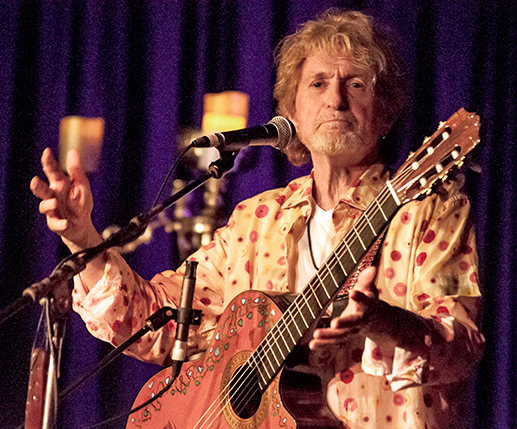
Photo by Dave Johnson

For Immediate Release

Jon Anderson To Tour South America In September 2012

Asheville, NC – Legendary vocalist Jon Anderson, YES’s singer/songwriter for 35 years along with his successful work with Vangelis, Kitaro, and Milton Nascimento, will be touring South America again this September, October, after his acclaimed previous tour had his many fans wanting more!

Jon Anderson South American tour dates:

09/11/2012 – Auditorio Nacional Adela Reta – Montevideo, Uruguay
09/14/2012 – Teatro Positivo – Curitiba, Brazil
09/17/2012 – Teatro Luis Mendonca – Recife, Brazil
09/19/2012 – Teatro Castro Alves – Salvador, Brazil
09/21/2012 – Centro Cultural Joao Nogueira – Rio de Janeiro, Brazil
09/22/2012 – Skyline Alphaville – Santana do Parnaiba, Brazil
09/26/2012 – Palacio das Artes – Belo Horizonte, Brazil
09/28/2012 – Teatro ND Ateneo – Buenos Aires, Argentina
09/30/2012 – Teatro Auditorium – Mar del Plata, Argentina
10/03/2012 – Teatro San Martin – Tucuman, Argentina
10/05/2012 – Teatro Luz y Fuerza – Cordoba, Argentina
10/07/2012 – Teatro Plaza – Mendoza, Argentina
10/10/2012 – Teatro El Circulo – Rosario, Argentina

Also soon to be announced, a special concert in Chile late November with the Youth Orchestra of Santiago, Orquestra Sinfonica Nacional Juvenil (OSEM). For more information visit http://www.jonanderson.com/tour.html

In honor of the World Cup to be held in Brazil in 2014, Jon has written a tribute the the event titled “Brasilian Music Sound”, with music from his good friend Christophe Lebled. Here’s a video of Jon’s new song created by Victor Cristean: http://www.youtube.com/watch?v=Ijih_zqMRks

In other news, Jon played a special one-off concert on August 8th at the Sadler’s Wells Theater in London, which was by all accounts a smashing success! This was the first time Jon had performed in the UK since his tour with Rick Wakeman in 2010. “The concert in London was with the Slovakian Chamber Orchestra with the help of my good friend composer Peter Machajdik plus a semi acoustic group I performed with a couple of years ago in Bratislava,” says Jon. In honor of the UK 2012 Olympics, Jon recorded a vocal version of the Vangelis song “Chariots of Fire” titled “Race To The End”, with lyrics penned by Jon. The song can be purchased at: http://www.amazon.com/Race-to-the-End/dp/B008PNX14Q/ref=sr_shvl_album_1?ie=UTF8&qid=1345046374&sr=301-1 Also, Jon is featured on four tracks on the new CD by Dennis Haklar called ‘Lizard’s Tales’

Jon recently completed a successful summer tour in support of his critically acclaimed new 21-minute digital download release ‘OPEN’. Here’s what the press have raved about Jon’s past few tours:

“Jon Anderson is as engaging and charming as ever!” – Howard Whitman, E-Gear Magazine, Philadelphia

“…with the still-sky-high voice wove together tunes from across his career” – Thomas Kintner, Hartford Courant, Hartford, CT

“Anderson’s voice is still remarkable!” – Victor Fiorillo, The Philly Post

“His gentle, joyful presence brings light into even a darkened room” – Eri-Chan Listens

“It was clear the audience was having a good time as they sang along with Anderson, cheered him on, danced at their tables, and gave him a standing ovation during the end of the show and the encore – the place was filled with excitement, happiness and lots of love!” Ashley Perez – Chicago Music Examiner

“The songs were clearly different….warm, and enough to remind listeners why they fell in love with YES in the first place” – John J. Moser, The Morning Call, MD

For more information: http://www.jonanderson.com, http://www.facebook.com/thejonanderson,

“Brasilian Music Sound” single can be purchased at http://www.amazon.com/Brasilian-Music-Sound/dp/B008S3CYO6/ref=sr_shvl_album_1?ie=UTF8&qid=1345046162&sr=301-1

Jon Anderson ‘OPEN’ digital download available: http://www.amazon.com/Open-Single/dp/B005XT5Z8U/ref=sr_1_1?s=music&ie=UTF8&qid=1336499182&sr=1-1

Jon Anderson ‘Survival & Other Stories’ available through Gonzo MultiMedia:
http://www.gonzomultimedia.co.uk,

Press Inquiries: Glass Onyon PR, Billy James, PH: 828-350-8158 glassonyonpr@gmail.com


IZZ Bassist/Songwriter/Vocalist, John Galgano, To Release Debut Solo Album on September 11, 2012

For Immediate Release

IZZ Bassist/Songwriter/Vocalist, John Galgano, To Release Debut Solo Album on September 11, 2012

August 29, 2012 – New York, NY – Doone Records is pleased to announce the release of Real Life is Meeting, the debut solo album by John Galgano.

John Galgano is a founding member of art-rock group, IZZ, and has been one of the band’s primary songwriters throughout its career. Real Life is Meeting presents eight tracks varying in styles and instrumentation, from the catchy, art-pop flavor of “Bigger on the Inside,” to the experimental, synth-based “The Only Thing,” to the 19-minute piece “1000,” all the while taking the listener in unexpected directions.

Real Life is Meeting showcases Galgano’s humor, his introspective and confessional lyrics, and his surprising song structures. In turns breathtakingly adventurous and heartrendingly beautiful, this music represents a musician and songwriter unencumbered by any preconceived ideas. The result is a fluid, naked, and daring collection of universal musings set to music – meditations on what it means to be human in the 21st century.

Galgano also recently played bass on Renaissance keyboardist Jason Hart’s new release, I and Thou’s Speak. Galgano has performed with IZZ at many art-rock festivals in the United States and Canada and has played bass for Hart while serving as the opening act during two Marillion Weekends (2007, 2011).

The line-up for Real Life is Meeting is:

John Galgano: Bass guitar, vocals, electric and acoustic guitars, keyboards
Laura Meade: Vocals
Paul Bremner: Electric guitar solos on “The Only Thing” and “Look Around”
Brian Coralian: Drums on “Lucky for Me” and “1000”
Greg DiMiceli: Drums on “This is How it Happens”
Shawn Bishop: Backing vocals, keyboards, percussion
John Raimondo: Drums on “Bigger on the Inside,” “The Only Thing” and “Look Around”
Chris Baldini: Lead vocals on “Look Around”
Greg Meade: Electric guitar solo on “Lucky for Me”

Mixed and Produced by Shawn Bishop
Mastered by Grammy-nominated engineer John Shyloski

For more information on Real Life is Meeting and for the most updated information about John Galgano and IZZ, please visit:

http://www.facebook.com/johngalganomusic
twitter: @johngalmusic
http://www.izznet.com
http://www.facebook.com/izzmusic
twitter: @izzmusic
http://www.facebook.com/laurameademusic

Real Life is Meeting will be available for purchase at Amazon, iTunes and all online music retailers.
DOONE RECORDS, INC : info@doonerecords.com

Press Inquiries: Glass Onyon PR, PH: 828-350-8158, glassonyonpr@gmail.com


Santana Trumpeter Bill Ortiz Celebrates Consciousness with Hip-Hop LP “Highest Wish” Featuring Casual, The Grouch and Zumbi

For Immediate Release

Santana Trumpeter Bill Ortiz Celebrates Consciousness with Hip-Hop LP “Highest Wish” Featuring Casual, The Grouch and Zumbi

August 27, 2012 – San Francisco, CA – A longstanding member of the Santana band, Bill Ortiz is proud to present his new full-length release titled Highest Wish. A follow up to his “Winter in America” EP released earlier this year, this new album project features conscious emcees such as Casual, The Grouch, Zumbi (of Zion I) and K-Maxx, as well as fellow Santana member (and 11 time Grammy® Award Winner) Tony Lindsey, and iconic poet/vocalist Linda Tillery, featured with a spoken word performance of Dr. Martin Luther King’s Nobel Peace Prize speech.

“Carlos has always used music to inspire and bring people together,” explains Ortiz. “I try to follow in that tradition. I’ve been really inspired by some of the Bay Area hip-hop artists like Casual, Zumbi and the Grouch who make music with enlightened lyrics,” Ortiz adds of how he chose his featured guests. “We often celebrate ignorance in our society, so I wanted to celebrate consciousness.” On his EP, which charted in the top 10 on CMJ’s hip hop charts for over a month, Ortiz covers Gil Scott Heron and Brian Jackson’s 1973 hit on the track “Winter in America” as an homage to the recently departed Heron. The concept video for this track has been featured on many mainstream hip-hop websites.

And while Ortiz is known over the past 12 years as the trumpeter with Santana, he’s been involved in the Hip-Hop and R&B movements for as long as he’s played music. He played trumpet on the classic hip-hop Souls of Mischief album “93 til Infinity” and has worked and recorded with Tony Toni Tone’, En Vogue, Sheila E, TLC, among others. Born in San Francisco, California, Ortiz began his mastery of the trumpet at age 10. While in school he was first chair trumpet in the San Francisco All-City Band, and by his mid-teens he was playing at local dances and clubs with a number of R&B and jazz groups, giving him an early and varied start to his professional career. His horizons were broadened even further during his college years with his first exposure to electronic and Latin music.

In the nineties Ortiz began working with R&B/Hip-Hop group Tony Toni Tone’ as a touring band member and featured soloist. He performed on five releases from the multi-platinum selling group, as well as toured the US, Canada and Europe. He accompanied Tony Toni Tone’ when they joined Janet Jackson on her “Alive” tour and made numerous TV appearances with them. This exposure led Ortiz to recording with Destiny’s Child, En Vogue, Souls of Mischief, Sheila E, TLC, Total, and Johnny “Guitar” Watson, among others.

Following his stay with Tony Toni Tone’, Ortiz toured and recorded with the legendary Boz Scaggs, and began a long and fruitful association with highly acclaimed jazz vocalist Lavay Smith (with whom he still works), recording two CDs and touring the US and Europe yet again.

Presently Ortiz is recording and touring with Carlos Santana, work which includes his performances on the Grammy® Award winning singles Smooth and The Game of Love. In addition, he has been very active as a studio musician playing Hip-Hop, R&B and Jazz. In 2009, Bill Ortiz released his debut solo album “From Where I Stand,” which charted on Billboard and garnered huge success among critics and fans alike in the USA and around the world. Bill Ortiz is endorsed by Rebel Spirit Clothing.

Bill spends a good amount of his time and energy getting involved in music education, both as a clinician and private instructor. He enjoys mentoring younger musicians and spreading the experiences and diversity of his musical background, which he tries to bring to all of his own playing and recordings.

“My musical upbringing contains a wide variety of styles, including Jazz, Hip Hop, Latin, African, R&B/Soul, and Blues,” he states. “What I am trying to do with my musical voice is reflect all of those elements of who I am as a musician and a person. I’m not a purist; I try to bring all these elements of who I am musically into one voice.”

Ortiz will celebrate the release of his new album with 2 performances (8pm and 10pm) with his All-Star Band at Biscuits and Blues at 401 Mason Street in San Francisco, CA (415) 292-2583 http://www.biscuitsandblues.com on October 19th, 2012

A music video for the song “Winter In America” is available from the link below. This song, featuring Tony Lindsey from Santana on lead vocals and The Grouch from Living Legends is a tribute to the late great Gil Scott-Heron. http://www.youtube.com/watch?v=h6R19VYdbHc

Highest Wish will be available September 4th, 2012.

For more information http://billortiz.com/music/

Press inquiries please contact Billy James at Glass Onyon PR at 828-350-8158, glassonyonpr@gmail.com or Nicole Balin at Ballin PR at 323-651-1580or nik@ballinpr.com


Something Else Reviews – Jeremy Spencer – Bend in the Road

Jeremy Spencer – Bend in the Road (2012)
Posted by Nick DeRiso

Jeremy Spencer, the Fleetwood Mac alum, has found inspiration in working with new voices, old masters and his own muse, creating an album of intimate, handmade joys that moves confidently from blues to Americana to rootsy pop.

Bend in the Road, seeing worldwide release on August 28, 2012, recalls in many ways the Elmore James-focused contributions he made to Fleetwood Mac’s first pair of Peter Green-led recordings in the late 1960s — a vibe that carried over to Spencer’s 2006 comeback recording Precious Little, as well. Spencer plays slide throughout, and includes James tracks like “The Sun is Shining” and “Stranger Blues” — the last of which is given a tasty new Spanish tinge. (The opener, called “Homesick,” was actually written and recorded in the early 1950s by James’ cousin, too.)

But there’s much more than that going on here.

Of course, Spencer was also known, in the late 1960s, for his canny way of echoing early rockers, and he gives a few notable nods (the groove on “Earthquake,” the unkempt vocals on “Stranger Blues” and “Homework”) to the legacies of lost mid-century geniuses like Buddy Holly and Eddie Cochran, too.

Bend in the Road, originally issued as a limited-edition double vinyl album for Record Store Day, also revives a few ideas that had lain dormant from his time in Fleetwood Mac, the brief solo career that followed, and during what would turn a three-decade retirement from the music business for Spencer — who left to follow a religious path.

He’d started on “Whispering Fields” in the run up to Fleetwood Mac’s self-titled 1967 debut, but set it aside. After a number of failed attempts at fashioning lyrics for the tune over the years, it’s presented here as an amiable, country-rocking instrumental. The searching, ruminative “Desired Haven” is a reworking of an idea that dates back to 1972, while “Refugees” started out as the title track from 1979′s Flee. “Aphrodite,” which recalls the inspirational lyricism of George Harrison, is originally from the late 1970s, as well. Meanwhile, “Earthquake” was written in 1981, after Spencer experienced a temblor in Greece.

[SOMETHING ELSE! REWIND: Jeremy Spencer’s former Fleetwood Mac bandmate Peter Green has also made a remarkable 2012 comeback with the thrillingly rambunctious ‘Blues Don’t Change.’]

At the same time, though, Bend in the Road doesn’t seem dated, never feels rote: That’s thanks in part of these flinty tandem moments with new collaborator Brett Lucas, who’s worked with Bettye LaVette in the past. His contributions are particularly notable on the series of Spencer instrumentals included here, as the second guitarist adds classically inspired flourishes, early rock punch, and a few saucy R&B asides. (The band is rounded out by drummer Todd Glass; bassist James Simonson; accordion player Duncan McMillan; a string section that included Molly Hughes, Mimi Morris and Stefan Koch; and background vocalist Rachel May, who offers an intriguing series of shadings — moving with sly ease from soaring heights to ghostly quietude.)

Credit Spencer, the roving gypsy heart of this project, as well. He finds inspiration everywhere — switching to keyboards on tracks like the majestically restrained “Merciful Sea” and James’ sizzling “Cry for My Baby,” while uncovering inspirational wellsprings that reside far beyond the iconic Delta cottonfields and shotgun shacks of traditional acoustic blues: There are devotional nods to his time away from music (“I Walked a Mile With Sorrow,” “Come to Me”), and a trio of tunes based upon poetry — “I Walked a Mile” (Robert Browning), “Secret Sorrow” (Henry Wadsworth Longfellow) and the title track (an obscure writer named Praveen).

In the end, this gives Bend in the River the feel of a career valedictory. It’s gloriously hard to pin down — something personified in standout tracks like “Homework,” which finds Spencer howling like old rock and stinging like Otis Rush, all over a loose groove that would have been right at home on an Eric Clapton solo recording from the early 1970s.

It’s that kind of record. The very good kind.

Source


UK Composer Makes ‘The Marvin Ayres String Orchestra’ Available For Musicians Worldwide

For Immediate Release

UK Composer Makes ‘The Marvin Ayres String Orchestra’ Available For Musicians Worldwide

August 22, 2012 – London, UK – Renowned UK composer Marvin Ayres is now offering his talents to music artists worldwide! Musicians everywhere can have their own bespoke string orchestra/quartet/trio/solos played, arranged, scored and produced in one studio, which can fit beautifully into songs and projects. Once provided with the material Marvin creates exciting and versatile string arrangements with real acoustic instruments – an innovative concept in this day of synthetic strings and orchestras!

“Real strings by a real human – just a click away!” – Tony Visconti

As well as his own orchestral compositions, Marvin Ayres has had strings used on many professional releases including: BBC, Channel 4, Disney, David Bowie, Basement Jaxx, B.E.F, Artful Dodger, Culture Club, TerraNivium, Heaven 17, Frankie Goes To Hollywood, Adam Ant, Stewart Copeland, Boy George and Kate Jackson.

Straddling the worlds of commercial and classical music, as composer/producer Marvin Ayres has developed a distinctive and innovative style by subjecting his instruments to electronic treatments, thereby pioneering an approach described as “Ambient Orchestral Minimalism”. Operating somewhere between the spiritual serenity of Gorecki and Part and the electronic adventures of Brian Eno and Aphex Twin, his key features are layers of organic strings filtered through atmospheric distortions and effects, sounding at once both familiar and utterly new.

“…like some of (Brian) Eno’s best work, the atmospheres Ayres creates can comfortably blend into the sonic backdrop, they are also compelling pieces of music that can dominate and transport.” – All About Jazz

A founding member of The Government, Ayres also made solo contributions to bands and artists throughout the late 1980s and 1990s, notably, Culture Club, Simply Red and Frankie Goes to Hollywood. In 1999 he was signed to the avant-garde label Mille Plateaux as composer/producer and released two ambient albums, Neptune and Cellosphere, to critical acclaim. Excerpts of these works have been performed live in an array of forums such as: London’s ‘Festival of Electronica'(with Groove Armada’s Patrick Dawes), and the inter-media cutting edge event ‘Sprawl’. His reputation as producer and performer came to the attention of Jaki Liebezeit (formerly of Can), who invited him to re-mix tracks and tour withLiebezeit’s band Club Off Chaos in early 2001. Ayres was commissioned by Einsturzende Neubauten’s electronica music publishers Freibank, and his compositions have featured on five ‘For Films’ albums.

In addition to his work with musicians, Ayres also collaborates with visual artists on audio-visual installations, which have been exhibited in major galleries and art houses in Europe and the U.S. In 2000, the prestigious ICA (Institute of Contemporary Arts) in London commissioned him to compose and produce their first ever DVD exhibition. The two works resulting from this were Sensory and Cycle, incorporating spatial soundscapes and psycho acoustics and were composed specifically for 5.1 Surround Sound. Marvin Ayres’ collaborative film Scape is to this day a permanent fixture on exhibition at The Tate Modern.

His ongoing project with Sonja Kristina (from rock legends Curved Air) is called MASK and their 2006 hit single ‘Waking The Dream’ came from their debut dual-disc album Heavy Petal. Their second album, Technopia was released on Repertoire Records in 2010 . Ayres has recently collaborated with Martyn Ware (Heaven 17) on his B.E.F (British Electronic Foundation) project ‘Dark’, creating and performing atmospheric and emotive string orchestrations and arrangements of classic songs performed by major artists.

As well as productions for other artists, the W.O.W studio is a mastering facility and recently remastered the legendary John Peel Sessions for Curved Air ‘Airwaves – Live At The BBC’ album. This year also sees the official release for Marvin Ayres new 120 piece orchestral composition/recording ‘The Harmogram Suite’ as a stereo CD and 5.1 surround sound DVD.

For information on booking the Marvin Ayres String Orchestra for recordings please contact alex@wallofwaves.com

http://marvinayresstringorchestra.tumblr.com
http://wallofwavesstudio.tumblr.com
http://www.marvinayres.com

Press Inquiries: Glass Onyon PR, PH: 828-350-8158, glassonyonpr@gmail.com


Examiner.com Interview with Steve Hillage

Steve Hillage interview and review

British prog-rock guitarist and songwriter Steve Hillage has been perpetually exploring, inventing, and recording intricate musical composition since the late 60s. Hillage navigated his ingenuity across a spectrum of musical genres including blues, rock, prog-rock, psychedelic-rock, space-rock, ambient, electronica and techno.
View slideshow: Steve Hillage interview: The intergalactic musical evolution of a guitar rocketeer

Steve Hillage joined his first band called Uriel in 1968; he left the group shortly afterwards to attend University of Kent in Canterbury. Meanwhile, the band renamed themselves Egg after signing with Decca Records. The following year, Hillage reunited with his bandmates under assumed names to record their lone album entitled, Arzachel. The recording featured a seventeen minute psychedelic jam session called, “Metempsychosis.”
British guitarist Steve Hillage has been perpetually exploring intricate musical composition
Photo credit:
http://www.facebook.com/stevehillageband
Steve Hillage Band – Aftaglid Live in Amsterdam 2006
Video: Steve Hillage Band – Aftaglid Live in Amsterdam 2006

In 1971, Hillage formed the progressive/space rock groupKhan, which was part of the Canterbury scene. Khan released their only album Space Shanty in’72. The group also toured around the UK supporting their label partnerCaravan. A second album was planned but the band split-up. Material for the planned second album was used on Hillage’s first solo-effort called Fish Rising.

In 1973, Steve Hillage joined prog-rock pioneer Kevin Ayers new band Decadence. He played on the bands fourth studio album Bananamour (recorded at Abbey Road Studios in London) and toured throughout Europe for several months. Hillage become a fan of the experimental rock group Gong and eventually joined them in France to participate on their album Flying Teapot (The first installment of The ‘Radio Gnome Invisible’ Trilogy).

Steve Hillage became a full-time member of Gong and the classic line-up evolved into … Daevid Allen –guitarist/vocals, Steve Hillage- guitars, Gilli Smyth -vocals, Didier Malherbe -saxophonist/flautist, Tim Blake –keyboards/synthesizers, Mike Howlett -bass guitar and Pierre Moerlen -drums and percussions.

Hillage became notably influential during the most successful period in the bands history. The recordings of The ‘Radio Gnome Invisible’ Trilogy” featured Gong’s best known works,Flying Teapot, Angel’s Egg and You.

Steve Hillage, who became the undisputed leader of Gong, left the group in 1975. While still in the band, Hillage launched his critically-acclaimed debut album, Fish Rising. The recording would prove to be pivotal in establishing a successful and long-standing solo career for the progressive rock trailblazer.

Next, Steve Hillage would record a string of musically profound albums. The first entitled simply, L(1976) produced by the genius of Todd Rundgren. The recording also featured many members from Rundgren’s progressive rock group Utopia. The album spotlighted several cover tunes … “Hurdy Gurdy Man” by Donovan and, “It’s All Too Much” penned by George Harrison from The Beatles, Yellow Submarine album of 1969.

Motivation Radio (1977) was Hillage’s third solo release followed by Green (1978) co-produced and engineered by Pink Floyd’s acclaimed drummer Nick Mason.

Subsequent releases by Steve Hillage were Live Herald, Rainbow Dome Musick, For To Next,and For To Next/And Not Or.

Throughout the 80s, Steve Hillage worked as a record producer with such artist as Robyn Hitchcock, Simple Minds, It Bites and Murray Head. Hillage also produced the Up To Our Hipsalbum by British alternative rock band The Charlatans in 1994.

In 1991, former Gong members Steve Hillage and Miquette Giraudy formed the ambient-techno dance band System 7. The band became part of an underground dance movement around London. They released the self-titled, System 7 album followed with their second release,777 in 1993 which reached the UK Top 40 album charts.

System 7 also launched spin-off projects called Mirror System and Groovy Intent. System 7 released (10) studio albums, and Mirror System released (2) studio albums. Steve Hillage became an ambient-techno cult hero.

Hillage and Giraudy performed at the ‘Gong Family Unconvention 2006’ at the Melkweg in Amsterdam. The three day event featured the original members of Gong and a setlist consisting of material from The ‘Radio Gnome Invisible’ Trilogy. The duo also performed music by The Steve Hillage Band and System 7.

In 2008, the successful ‘Gong Family Unconvention’ was resurrected in London for several shows. The line-up also included original members Daevid Allen, Gilli Smyth, and Mike Howlett.

In 2009, Gong released 2032, billed as a further installment to the Gong mythology (the central part being The ‘Radio Gnome Invisible’ Trilogy). The album was produced and mixed by Steve Hillage.

Steve Hillage will be re-releasing, The Steve Hillage Band Live -The 2006 concert at the ‘Gong Family Unconvention’ in Amsterdam and will be available on DVD and CD on September 12th.It’s the first live performance by The Steve Hillage Band in 25 years!

Steve Hillage and Miquette Giraudy will be releasing a brand new System 7 EP very soon, and watch out for a new collaboration with Japan’s Rovo.

I had the rare and pleasant opportunity to chat with Steve Hillage by Skype from his home in England. Here’s my interview with guitar virtuoso, songwriter, singer, techno and progressive cult hero, and experimental music trailblazer, STEVE HILLAGE.

Ray Shasho: Steve, how are you?

Steve Hillage: “Pretty good, not amazing, I’ve had problems with my mobile phone company and have been on the phone a lot to change my tariff and it’s been really-really boring, but apart from that everything is fine. The weather is getting better here.”

Ray Shasho: I’ve always appreciated progressive rock music and grew up mesmerized by bands like … Camel, Triumvirat, Gentle Giant, King Crimson, Genesis, Pink Floyd, Mahavishnu Orchestra, the rock orchestra Synergy, and of course Gong. What artists inspired you into creating your own style of music?

Steve Hillage: “I’ve always said that my number one inspiration has got to be Jimi Hendrix …absolutely by a long way. I was in school in the 60s, so I liked … The Beatles, Pink Floyd, Cream, and all that sort of stuff. When I started to get involved with more complex music, it was what we started doing in school. I roomed with a very interesting keyboard player named Dave Stewart who later had a group called ‘Egg’ and later ‘Hatfield and the North.’ We started working on music at school and getting into things with odd time signatures and things like that, and then we discovered other people were doing it. This was before the term “progressive rock” actually arose. But we discovered that there was sort of a hotbed of musicians doing it in Canterbury. By kind of a coincidence, I went to University in Canterbury and became friendly with bands like Caravan and Soft Machine.”

“I didn’t stay that long at University actually because I felt that music was a far more exciting thing to do, and that’s what ultimately led me into joining Gong, because Daevid Allen was Soft Machine’s original lead guitarist. He had already left before I met the guys, but he was still involved behind the scenes and I got involved in that scene. I introduced Daevid to the people in Canterbury, that’s how he ended up in ‘Hatfield and the North’, and …voila, the rest his history!”

Ray Shasho: Gong has had incredible longevity and developed a cult following, is that because they’re a band of virtuoso musicians?

Steve Hillage: “There have been a lot of different styles in Gong. In its classic period, you had a really amazing collection of strong individuals who had their own style and managed to come up with something that was both musically sophisticated and extremely psychedelic. There haven’t been many psychedelic projects that have had that level of musical technique, so it was pretty special in that respect. So in various later splitting up versions of Gong … you’ve had some aspects that have gone more for the musical techniques like Pierre Moerlen’s Gong, and others … obviously Daevid has stayed more with his own mythology, sort of quirkiness, and his humor. I went more into widescreen, psychedelic, guitar-based stuff. But they’ve all got elements of Gong in them. There are certainly elements of Gong in our dance music project System 7, and there a lot of people in the dance music scene that use to be Gong fans. It’s all one big family in a way … so we call it the “Gong Family.”

Ray Shasho: Wasn’t Bill Bruford in the band for awhile too?

Steve Hillage: “He didn’t last very long. We had a problem about a border crossing between Germany and France where are drummer had something in his pocket that he shouldn’t have. Customs banned him … which was bad for him but even worse for us because we had some gigs and didn’t have a drummer. We were on Virgin Records at the time and Richard Branson said, “I’ve got a great idea, I met Bill Bruford the other day and he’s looking for something to do …he’d love to do it.”

“So he was on the next plane over. It was amazing working with him, but I think we were a little bit too wacky for his tastes on a personal level. He found us all a bit hard to handle. We did some really good recordings at some of the Buford gigs, around bootlegs, and pretty amazing stuff.”

Ray Shasho: Gong has certainly had an influence on electronica/dance music.

Steve Hillage: “We’ve certainly had an influence on things, but other bands in that era have also had an influence, particularly German groups like ‘Can’ and ‘Kraftwerk’ have had a big influence on modern electronic music as well. When we first heard Kraftwerk, it was still before they got involved with synths (synthesizers & keyboards) so they were still an acoustic band with flute. They developed into using synths after a few years but were originally a live band in the early 70s.”

Ray Shasho: Gong back in its heyday must have been amazing?

Steve Hillage: “It was exhilarating … a bit of a rollercoaster ride and chaotic. It was quite a combustible relationship of strong-minded people. So it kind of fell apart after a few years during the so-called classic line-up … in 1975 actually. There has been all kinds of offshoots and continuation Gongs and different types of Gongs since the classic line-up split up in ’75.”

Ray Shasho: Gong has reformed several times over the past several years as well … how did that come about?

Steve Hillage: “What happened was a group of fans started an annual event called an “Unconvention” and gradually various original Gong members got sucked into this. In 2005, we came along and we did a System 7 set … Daevid wasn’t there but Miquette, Didier Malherbe, Mike Howlett, Gilli Smyth and Tim Blake were there, so we said, let’s have a jam. We hadn’t played together in thirty years or more and it was really fantastic.”

“Then somebody came up with an idea for doing a really big “Unconvention” in Amsterdam at the Melkweg, so we all went and did our individual sets, then did our Gong set at the end. That’s where I decided to do a short Steve Hillage Band set, which is the recording that we’re releasing on DVD and CD. It’s already been out for a couple of years on a short scale, but we’re doing it on a bigger scale now on our own label. And it was that event in Amsterdam in November of 2006 that was very important for us, it was massive and fantastic, because after that we decided to make another Gong album, 2032, and we did a large tour in 2009 spilling over into 2010.”

“Which brings us into present day, right now Daevid is experimenting with a new style of Gong and I’m no longer involved … but I wish him well. There is going to be a tour this autumn. I’m not sure if they’re coming to America … primarily Europe and the UK.”

Ray Shasho: Steve, I watched The Steve Hillage Band live DVD from the ‘Unconvention’ in Amsterdam, and it was an incredible compilation of music played to its perfection, I gave it 5 stars.

Steve Hillage: “Fantastic, thank you very much. We also did some sets like that on the Gong tour. Mike Howlett played on that and was also on Fish Rising and was Gong’s bassist, we also had Chris Taylor who was the drummer of Gong. So we were playing like a live Gong support act, which was like half of the band and then we’d do the main set when the rest of Gong would appear.”

“If we do it again … which we might consider in the next year or two, it would be a standalone Steve Hillage Band, and I think if we did that, we’d need to do some new material as well. I wouldn’t want to do a tour just of the old material. I’m not really one of those artists who does sort of a legacy tour and play a whole hour of one album or something.”

Ray Shasho: I’m going to mention a few albums that you recorded in the past as The Steve Hillage Band and you can jump in with any comments if you see fit. First of all …Fish Rising was one of your best albums; it sort of had a ‘Mahavishnu Orchestra’ /Birds of Fire feel to it.

Steve Hillage: “Fish Rising was a very special album, quite a lot of material was written before I joined Gong … from the aborted second album with my band ‘Khan.’ I’ve kept that material while I was in Gong and it had very unique material, but it’s got a very strong Gong influence. It was all my original material with Canterbury influence in there as well. Yea, it was a very special album for sure. The majority of the set we did in Amsterdam at the Melkweg was material from Fish Rising.”

Another inspiring recording was your 1978 album, Green when you worked with Pink Floyd’s legendary drummer Nick Mason.

Steve Hillage: “We met Nick Mason during the last Gong album that I was involved with calledShamal … in the 70s after Daevid left. It was when I was in the process of leaving Gong so I didn’t have a huge involvement in that, but Nick Mason was the co-producer of that album and I got to know him then. He was just fantastic to work with.”

Ray Shasho: Todd Rundgren produced your second studio album called, L.

Steve Hillage: “It was quite interesting because I had really gotten into his material starting withSomething/Anything and I followed his developments with Utopia and A Wizard, a True Star. When he came out with that record “Initiation,” I thought wow … he’s really like vanilla soul. I left Gong and we didn’t know how we were going to proceed, then one of the guy’s with Virgin Records said, “Hey, we’ve been talking with Todd Rundgren and he’s heard of you and into working with you.” I said let’s do that one with Todd! It all came together really rapidly actually and another exhilarating rollercoaster ride.”

Ray Shasho: Steve, was there an album you were ‘especially’ proud of?

Steve Hillage: “To tell you the truth, one of the ones I’m most proud of is one that didn’t appeal so much in America called, Motivation Radio. I thought it was very original and laid the basis for our development into electronics and dance music. There was a track on the Green album called; “Ether Ships” and I sometimes say … that was the first System 7 track.”

Ray Shasho: Talk about how System 7 came into its fruition.

Steve Hillage: “Basically at the end of the 70s, we stopped The Steve Hillage Band; I got into a lot of record producing work, and we just found ourselves sucked into the whole development of electronic dance music in the 80s, and also through my connection with Simple Minds, who were sort of an underground club band. When the big acid house moment came in ’87, ’88, we felt …wow … this is it, we found our new musical home. So the idea was to make a dance music based project but still using some of the sounds of the guitar and synth that we’d feature on Gong and Steve Hillage Band records, and that’s basically what we’re still doing. We’ve been doing that for almost 23 years now. We do a lot of shows and travel around the world, but we’re not exclusively into doing that, we like to do all kinds of other things as well.”

“I like a lot of “world music” as well. I’ve got a lot of experience working with Arab artists, in France in particular, I love it. My specific interest in Arab music started with Miquette, my partner, who I met in 1972, and she played me Umm Kulthum. I started meeting up with French Algerian musicians and that’s how I got involved in producing Arab music. I produced a lot of records for Arab singers … Rachid Taha, Khaled, a Tunisian Egyptian singer Latifa, and another French Algerian singer called Faudel. My biggest Arab music project is called, 1, 2, 3, Soleils. It was a live concert with an orchestra in1998 featuring Rachid Taha, Khaled and Faudel. It was the biggest selling Rai (genre) record of all time.”

Ray Shasho: Steve, what are your very latest projects?

“We’ve got a new System 7 EP coming out, and of course we’re re-releasing, The Steve Hillage Band live from Amsterdam DVD and CD in September. Another project that I’d also like to mention and is really interesting is called, ‘Phoenix Rising.’ It’s collaboration between System 7 and a Japanese psychedelic progressive jam band called Rovo. We work a lot in Japan and are quite successful out there. We’ve been friendly with Rovo for about a decade, and we ended up doing this live tour where we ended up with more of Rovo doing live versions of System 7 tracks, and System 7 doing techno versions of Rovo tracks. So we decided to do an album together. So right now … I’m writing material along with the guys in Japan who are also writing material, and we’re going out to Japan for the whole month of September to make the album. We hope to have the album ready for release next year and ready for promotion in March. Then we want to do a ‘Phoenix Rising’ tour in Europe, and we’d love to be able to get it over to America. I don’t think there’s ever been a more integrated project between techno music and live rock.”

Ray Shasho: Steve, thank you so much for being on the Skype call today, and also for all the incredible music that you’ve given to us over the years. I hope to see you either with The Steve Hillage Band or System 7 one day soon here in Florida.

Steve Hillage: “It’s been nice talking with you and I’m so glad our Skype transmission worked out (all laughing). Jolly good … Take care Ray!”

Steve Hillage will be re-releasing The Steve Hillage Band Live -The 2006 concert at the ‘Gong Family Unconvention’ in Amsterdam available on DVD and CD -September 12th. It’s the first live performance by The Steve Hillage Band in 25 years! -Preorder now at amazon.com.

Steve Hillage Band ‘Gong Family Unconvention’ DVD excerpts atwww.stevehillageuncondvd.com

Steve Hillage Band on Facebook http://www.facebook.com/stevehillageband

Steve Hillage on Myspace http://www.myspace.com/stevehillage

System 7 official website http://www.a-wave.com/system7/

Planet Gong http://www.planetgong.co.uk

Special thanks to ‘the great Billy James’ of Glass Onyon PR

Official website https://glassonyonpublicity.wordpress.com/

Contact classic rock music reporter Ray Shasho at rockraymond.shasho@gmail.com

Purchase Ray’s very special memoir called ‘Check the Gs’ -The True Story of an Eclectic American Family and Their Wacky Family Business … You’ll LIVE IT! Also available for download on NOOK or KINDLE edition for JUST .99 CENTS at amazon.com orbarnesandnoble.com -Support Ray so he can continue to bring you quality classic rock music reporting.

~~Pacific Book Review says Ray Shasho is a product of the second half of the 20th century, made in the USA from parts around the world, and within him is every trend in music, television, politics and culture contributing to his philosophical and comically analytical reflections collected in his fine book of memories. I found Check the Gs to be pure entertainment, fantastic fun and a catalyst to igniting so many memories of my own life, as I too am within a few years of Ray. So to all, I say if you have a bit of grey hair (or no hair), buy this book! It’s a great gift for your “over-the-hill” friends, or for their kids, if they are the history buffs of younger generations trying to figure out why we are the way we are.

© Copyright rayshasho.com. All Rights Reserved

Source


The Rocktologist Interview with Jeremy Spencer

Jeremy Spencer: “if real blues got the recognition it deserves, something precious might get lost”.
by Daniel Pavlica

For many, Jeremy Spencer’s slide guitar remains one of the defining sounds of 60’s rock, or blues rock if you chose. He will always be best known for his resourceful musical relationship with Peter Green in Fleetwood Mac. Nowadays he is kept busy creating comic strip illustrations and writing stories, as well as making music!

Eric Clapton had Robert Johnson, while musically you grew on Elmore James. Is that a fair verdict?

I’d say that is a fair assessment!

If I were a little wicked, I would say that you two took blues a little too seriously.

I suppose I was, in the sense that I wanted to listen to as much as I could, but I balanced that ‘seriousness’ with hefty doses of 1950’s rockabilly, doo wop and country music.

What is so special about Elmore James in comparison to other blues greats?

Everyone has different influences, so I can’t speak for other musicians/guitarists. But for me, out of other blues artists, he caught my attention enough to want to play and sing like him. I wanted to sing and play like Otis Rush, too, but I seemed to have been blessed with an uncanny knack to get a handle on Elmore’s music!

Was it as natural to get involved with blues in the 60s, as it is generally believed today?

At the time (around 1966) it wasn’t natural for most young musicians. To be successful when gigging, bands had to play soul music like Sam and Dave, and Wilson Pickett, or cover pop bands like the Who, Beatles and Beach Boys. When I was playing with my little hometown band, blues was not a great crowd draw, but we gained a small following with it.

What are your memories of working with Peter Green? After all, you had one of rock’s most creative partnerships.

I would say that I learned from Peter Green, not so much from his guitar playing – which of course was excellent, but his simple ‘less is more’ approach to music. We shared similar sensibilities regarding it. For instance, Peter once told Eric Clapton that he preferred listening to Hank B. Marvin than a certain fast playing rock/blues player that was on the scene at the time! I think that gives an idea of what I mean in a few words.
Picture
A lot of the music that was around at that time was heavily influenced by blues, still nobody else was playing it the way you did. How do you see your role in the British blues boom?

By the late 60’s, due to the commercial success of John Mayall, Cream, Hendrix and us (Fleetwood Mac), overdriven blues styles were becoming acceptable in mainstream music, and through bands such as Led Zeppelin, those styles were filtering into stuff antecedent to the heavy metal and glamrock bands of the 70’s and 80’s.

I think for the first year or so of Fleetwood Mac, we were adamantly trying to stay true to the classic forms of Chicago blues despite what we considered the cosmetic, progressive images and forms that many other British blues bands were taking. Especially when some of those bands, who previously had been playing pop or soul music, had merely donned a ‘blues’ hat now that it was fashionable and fairly lucrative.

You jammed with Otis Spann and Willie Dixon on one of Fleetwood Mac’s US tours. Tell us more about that?

During those ‘Fleetwood Mac in Chicago’ Chess sessions, I played with Elmore James’ sax player, J. T. Brown. On my tracks there was Willy Dixon on bass and Mick on the drums. Pretty sparse! But J. T. and I had a wonderful time playing together; he and I must have smiled the whole time, and I think that comes across on the album. Anyway, J. T. was like a grandfather to me, he had none of that ‘territorial’ vibe of blues is ‘our’ (black’s) music and he seemed rather taken that this little whitey from another time and place was so into his music. We chatted a lot over coffee in the break, mainly about Elmore of course and he didn’t seem to mind!

About nine months after the recording, J. T. called me in London from Chicago, and played me a ‘78 over the phone of Elmore’s ‘Coming Home’, telling me the history of how Elmore had cut it the day after coming out of hospital. Apparently the time in hospital had affected Elmore’s fingers so he could only play slide and not finger lead for the flip side which was ‘Twelve year-old Boy’. About three months later, J. T. died. He was ‘Coming Home’.

What is the definite bottom line on you leaving Fleetwood Mac?

I don’t know if this is the ‘definite bottom line’ under why I left, but I was sad, uninspired musically, I had questions about life, death, love, my future, God – everything! I couldn’t go on with it. Bottom line, I had to leave in order to step back from the picture and get my life sorted out. I wouldn’t be here today if I hadn’t and they would not have gone on to be one of the biggest bands in history! I don’t say that in a self-demeaning way, because I knew when I heard the first album with the Buckingham-Nicks line up, that they had hit on something good with an enormously catchy appeal.

Besides that, after I left them, I prayed for God to reward them with success beyond their dreams. He answered that prayer.

How did Jeremy Spencer and the Children band come together?

When I joined the Children of God, a community that specialized in evangelical contemporary music, I found myself playing alongside black ‘soul’ brothers, Joni Mitchell and Joan Baez style folk artists, cowboy country and gospel singers, psychedelic Hendrix adherents and more. Consequently, some of us formed a band and an album resulted, consisting of mostly self-penned numbers — some people said that the music sounded like Jefferson Airplane and West Coast psychedelic rock! Well, I was experimenting with folksy songs and structured twin guitar work with my co-guitarist at the time, Phil Ham, who was actually a Clapton aficionado from Dallas, Texas.

You released three albums in the 70s, “Jeremy Spencer” (1970), “Jeremy Spencer and the Children” (1973) and “Flee” (1979), but right until the dawning of the new millennium you pretty much kept a low profile. What were you up to then and what was your relation towards music in that period?

I have recorded in various small studios and done the occasional performance, but it is with a great deal of thought and contemplation. I don’t have the time or the desire to go back to the gigging grind, although I love playing with like-minded musicians. I have recently enjoyed playing with a British blues artist, Papa George, and with a young French guitarist, Mick Ravassat and his little ‘Blue Team’. I am looking forward to working with them more in the coming months.

Comic strip and graphic novel illustrating is a pleasure for me too — black ink brush line work like Will Eisner, and Terry and Rachel Dodson. I get inspired with ideas for that and I love writing short novels and stories, too. I am happy to be busy!

With “Precious Little” (2006) and now “Bend in the Road” (2012) you seem to be having something of a purple patch.
(One definition of ‘Purple patch’: A period of notable success or good luck.)

If you mean commercially, not so much as yet! As far as the beginning of a tapping into and releasing of musical wealth, I very much think so.
Picture
On “Bend in the Road,” you are partnered by Brett Lucas, a young firebrand from Detroit, who co-produced the album.

Yes. He is much respected in Detroit and tours regularly with Betty Lavette, often in Europe. It was wonderful working with him on producing and arranging, as he is able to diversify, and he especially enjoyed working on the instrumentals. We even were able to indulge our liking for subtle string arrangements!

You’ve tweaked your musical style a bit adding a large range of influences.

I have. Although, as I have noted before, a lot of the material has been in my musical ‘cold storage’ for many years!

The new album will be released worldwide on August 28th. Do you plan to tour in support of its release?

As yet, I may do some low-key gigs here and there, but there are no plans for touring.

What is the first thing that leaps to mind when someone suggests a Fleetwood Mac reunion to you?

I think of Mark Knopfler’s response to a similar question in an interview — with an ‘audible sigh’!

What is your opinion on modern blues guitarists like Joe Bonamassa?

In general, I am neither keen on nor moved by what is termed ‘blues/rock’ style, as it usually means hard, fast and overdriven with little more emotion than aggression and bitter frustration for its own sake. I prefer to hear blues without the ‘rock’ mix! A Latin mix is nice, and can be quite moving and positively uplifting for me.

As far as Joe B. is concerned, I did hear a track called ‘Happier Times’, which I liked — although it is not strictly blues.

Do you think the blues gets the recognition it deserves these days?

I am all in favour of introducing that music to the youth, so that they can appreciate it and see the roots of some of what they like to listen to, but I think for the blues to retain its charisma, I am sort of glad it remains a niche market. We didn’t, don’t and hopefully won’t see too many #1 blues hits!

I have seen recently, however, a small growth of interest from young people in the more classic, subtle style of blues, rather than in the type that seems to have been prevalent in the last say, fifteen or twenty years — mostly derived from the screaming vocals and overplayed, overdriven Les Paul/Marshal stuff of the late sixties.

Still, I have a feeling that if real blues got the recognition it deserves, something precious might get lost. Fame, fortune, popularity and recognition do not always go hand in hand with true honour.

Source


Hood River Interview with Gregg Rolie

Gregg Rolie brings the music of Santana to the Gorge Aug. 19

Interview with former Santana lead singer

Gregg Rolie band plays Hood River Aug. 19.

Jim Drake

August 10, 2012

Jim Drake’s Entertainment Blog

Gregg Rolie brings the music of Santana to the Gorge Aug. 19

Gregg Rolie has had an amazing career in rock music and it’s fortunate that there are no signs of the pace slowing down. What’s even more amazing is that, the other day, he took a few minutes out of his day to talk to me, from his home in Texas. We talked about his old bands, his new band, the band that he just got off the road with and the bands he likes to listen to.

We also talked about the festivals he’s played at (and believe me, we’re talking about the grandfather of all festivals here) and the song that he’ll probably have to keep singing for the rest of his life, which, fortunately for us, he really enjoys doing. Whew. Oh, and there’s a bunch of other stuff in there, too, but I was too busy writing down all the A-list people he’s played with to remember what those were right now.

I’m hoping that you’re in the loop about Rolie’s upcoming show here in the Gorge. If not, you are now, so please double check your calendar for Sunday, Aug. 19, at the historic Columbia Gorge Hotel. The west lawn will be transformed into an intimate concert venue with a full stage and professional sound. Those who were at last month’s Pablo Cruise concert know what I’m talking about, so please spread the word about this show.

The manager of the hotel, Paul Robinson, told me he wants local people to re-aquaint themselves with this landmark building, and experience the hotel in a way that’s never been tried before — a summer concert destination. It’s always an undertaking to get programs like this off the ground, and everyone’s hoping that bringing in music acts that normally don’t play in Hood River will generate the interest in continuing the series for years to come.

Are you still wondering who Gregg Rolie is? I bet you’ve heard him on the radio so many times, you just won’t believe it when you finally figure it out. Crossing the genres between Latin-influenced rock and stadium-sized power ballads, Rolie has had a most interesting career as a keyboardist/lead singer for the rock band Santana and a member of the rock band Journey, who toured so much that they had to name one of their tours the “Infinity Tour.”

Just last month, Rolie was a member of Ringo Starr’s All-Star Band, which stopped by just down the road from us. And as I mentioned before, Rolie and his own 7-piece band will roll into Hood River next week. I’m thinking the drive to Hood River will be a little easier for him than his experience in 1969, when he had to be airlifted by helicopter over 500,000 folks to play the stage at the Woodstock music festival. And I know that if you show up early enough, you’ll get a front-row seat.

Interview with Gregg Rolie

You have a show coming up here in Hood River and I appreciate the time you’re taking to do an interview.
My pleasure, nothing to it, I’ve done a million of em! (laughs)

After all this time, the early Santana music is still very important to you. Why is that?
Well, it’s exciting! The main thing about the music that we created back then, the six of us, was the fact that it’s kind of like blues, it never goes away. It is what it is, and it still has the same excitement, the crowds still get just as crazy as they always have listening to this music, and they love it. And I love playing it. Like I’ve always said, If I couldn’t play this right, I’d rather drive a cab. So I’m still in!

Will you be doing any other tunes from any of your other bands or projects or CDs?
This music will be the hits from Santana that I played and sang on, plus other songs, plus new material that’s of the same genre. It’s all Latin rock, which I’ve always disliked that tag, but I guess you had to call it something. So it’s that kind of music, and it’s a seven-piece band, and it’s an awesome sounding group.

Out of all the different keyboards that are out there, what is your favorite to play right now?
The Hammond B3, yeah, it’s what I play. I mean, I can play synthesizer, and I can play piano, but I’m really a B3 player. And it’s just such a unique instrument. I was just out with Ringo Starr this summer and the organ just fills the whole band up, that’s what the instrument does, it’s just enormous.

And if you mix it right and it’s not overpowering, it just makes the band sound huge, and that’s what happens with it. And I love doing that. And not to mention playing solo stuff, there’s nothing like it. It keeps me interested, and it’s unique to itself. They’ve made copies of (the B3) electronically, and it’s real close, but there’s nothing like that old original wood-cased instrument.

How did you get involved in the Ringo Starr tour?
They gave me a call, and uh, I was kind of shocked! I was like, did you run out of keyboard players? Why are you calling me? But as I found out playing in this band with Todd Rundgren (Utopia), Steve Lukather (Toto), myself, Richard Page (Mr. Mister), Gregg Bissonette (David Lee Roth), Ringo on drums, and Mark Rivera (Foreigner) on sax, and keyboards and various other instruments, it was just an incredible experience. I kept looking over to him (Ringo), and I can’t believe I’m on the same stage with this guy. You know, he was like a high-school idol, you know, and there I was! If you told me back in high school that I’d be playing with Ringo Starr someday, I would have said, “Sure, that’s gonna happen…I mean, you’re kidding…”

The Beatles were such a high water mark in music, they started more music than they probably even know about, because people started bands just because they were there. If you told me I was gonna play in a band with Todd Rundgren I would be like, umm, (laughs) that’s Santana to Todd Rundgren, (laughs) to the Beatles, I mean, let me see, how is that gonna work? But it was an extraordinary experience.

And that’s kinda where I was at, I was gonna be an architect, so playing with him was an extraordinary experience, and the band was tremendous. Steve Lukather is an unbelievable guitar player, he plays in any genre you want, and he can play it all. And everybody played hard, on their own music as well as the music of others. And that’s what it takes to make a good band, that’s exactly what happened, we were all kind of blown away, because it was so eclectic.

From the stuff I’ve seen on you tube, and all the reviews it really looks like you guys are having a lot of fun.
Yeah, I hope we repeat it, it was an awful lot of fun.

What is your best memory of the Woodstock festival?
(Laughs), well, it’s always the same one, so I’ll tell you too. Well, when we flew into there, people were parked on the highway, and you couldn’t drive in, and all the highways were closed. So, they had helicopters, and we flew in, and I remember an assistant from Bill Graham’s office said “look down there, look at all those people.” Well, I didn’t have any way to guage what size the crowd was when we looked at them from the air, you know, but it turned out to be 500,000 people. We had played to 10,000, 30,000, and 40,000, and all that, there were a lot of festivals during that time, but I really had no way to gauge it, seeing it from the air.

And the same thing happened when we hit the stage, it just looked like, you know, after 10,000 people, it’s all hair and teeth. And you really can’t see it all, it’s just a sea of people. After our set I stayed there and I watched Sly Stone, and we drove out that night. It took forever to get through 500,000 people. And that’s when it struck me how big this event was. Luckily, we didn’t drive in, it would have scared me to death! So that worked out for me, it was just another gig, another festival, but it turned out to be the grand father to all of this stuff, and if you were in the movie, you had a career, and that’s what happened to Santana.

You were in Santana for the first four albums. What did you feel was happening to that band that made you want to part ways?
Well, actually, Carlos wanted to get into some jazz, and you know, a little bit of jazz is good, but that’s not what I wanted to do. I liked the music we developed, and the song “In a Silent Way” was a jazz piece, but to me, it suited the band, and that song made sense to me. But some of the other stuff didn’t make any sense to me, so we had musical differences, and I left. I then started a restaurant in Seattle with my dad, and then I got a call from Herbie Herbert and Neal Schon to play music, so I moved back to San Francisco and that was the start for the band Journey.

What was it like touring with Journey?
I’ll put it this way, Santana was a phenomena in that all the pieces fell together rapidly. Journey was a well-built organization, and the music was something that was built up. When we started out, we could sell a lot more tickets and albums. If the original Journey had been starting out now, we would have been touring with Dave Matthews, it was really a jam band — and known for the extended solos and high excitement level. And then it turned into a vocal band when (Steve) Perry joined. We made a choice to do that, to become a vocal band, which was real different for me, and a good experience, too. I became a better writer through it all, and the band was really a good one. I haven’t been in bad bands, I gotta tell you (laughs) I’ve been pretty fortunate about it!

In 1979-80, you guys spent something like 8 months on the road.
Yeah, we called that the Infinity Tour, the album was called Infinity, it was named properly. It went on forever, we used to joke with the tour manager during our travels — we’d announce that “Cairo is just over the next hill!” I mean, wow, we must have gone through Chicago, the airport hub, flying to get to other places at least 11 times, maybe 13, some odd number like that. It was a lot, it was a lot of traveling.

Have you ever been up here to the Northwest just to look around and spend some time here?
Well, I was born up in Seattle, and I always joke that I managed to move my family out of there when I was 5 years old — I told them it rains too much there — we must leave, (laughs) so we moved to California. I was raised in California, but I’ve gone back to visit, and yeah, there’s something special about the Northwest. I was born there and a lot of my family is up in that area, and it’s pretty, it’s green. But it’s too gray!

I think you’ll like Hood River in the summertime, we have Mt Hood right here, right on the Columbia River…
Yeah, I’m looking forward to it. I think we’ll fit in because this music is made for the outdoors! I hope people show up — if they don’t they’re missing out, and you’ll have to tell them that they missed out on something (laughs)!

Do you still maintain a lot of contact with your old band mates?
Not a lot, but I have talked to Carlos recently and we’ve been talking about getting back together to do something, maybe playing Vegas. He’s got a resident gig at Mandalay Bay and maybe Mike Shrieve and myself will come in and play with him. Yeah, it would be cool, and so far we’re just talking, so we’ll see what happens. I have talked to the Journey guys, and I played with them a few years ago. I live in Austin now, and they came through in 2009. I sat in with them, which was a rare moment, so you never know, we’ll see what happens!

What music do you listen to get inspiration from?
Believe it or not, I listen to a lot of country. It’s on the XM radio inside and outside of the house, and whatever I’m doing, it’s just kind of on. The songs are pretty good, I get a kick out of some of the lyrics, they write about some funny stuff! The songs remind of 80s rock with a twang. Some of the young stuff is good, and I’ve gone out to see some bands here in Austin —there’s a ton of bands, tons of places to play, but I don’t really listen to any one thing.

I saw on the web you have a CD called “Rain Dance.”
Yeah, we put that out in 2009, and it’s a live CD of this band that I’m bringing to the Gorge. It’s the Santana stuff and music of the same genre, the same thing that we’re gonna be playing up there. And we’ll have those CDs for sale.

What has it been like going through all these different recording processes? Now-a-days, you can make a CD in your house…
Yeah, I have, and I’ve done that. In 2001 I made a CD called “Roots” that was recorded in my drummer’s house and mine. We had it mastered and mixed in another place, but the recording was all done in home studios, and it sounds awesome. Yeah, you can do just about anything now, but you can’t beat a big room with old tube equipment for getting things like drums, they just sound amazingly better. Most people don’t know, but it really does make a difference. Another thing is to have a big console, and it’s really the analog equipment that makes it warm and sound good. But you can get an awful lot of stuff that can record digitally, and the equipment is all compact and you can just take it anywhere.

Was the old Santana stuff recorded track by track or was it recorded with more of a live feel?
We did have a live aspect to it, we isolated everybody as best as possible, but the drums always would leak. So it was really on the drummer to get it right. You would play the whole track all together and then if there was enough isolation on specific instruments, you could go back and do it again. That’s kind of when it became popular to have 8 tracks and 16 tracks — you could do things like that.

Before multitracks, you just played, or you got fired! (laughs), I mean, no kidding, sometimes, it was like being with Sinatra. His band played, he sang, and it was all recorded at once. I came from an era kind of like that, and then it changed rapidly where you could go in and sing separately and do all those takes and all that kind of stuff. Now it’s gotten ridiculous, with auto-tune — you can hear these auto-tunes in these singers, where the voice just pops around and sounds too mechanical. I don’t much care for that kind of stuff. I still prefer the real music, and you’ve got to be able to play.

What got you interested in doing the Fleetwood Mac song “Black Magic Woman?”
Drummer Mike Shrieve gave me that Fleetwood Mac album, because he knew I was a Peter Green fan. Peter Green wrote that song, along with another song called “Supernatural,” a gorgeous song he did with John Mayall and the Bluesbreakers. That’s how I first got introduced to Peter Green. Anyway, I heard that song and thought, oh, man, I could sing this! It took me a year to talk the guys in Santana into doing that song, and now, it won’t go away. Carlos has to play it for the rest of his life, I’m afraid. . . (laughs) . . . but I don’t mind, I love singing the song, you know, and I’ve done it for 40 years.

Appreciate it, Mr. Rollie, it sounds like it’s gonna be a great show in a beautiful setting.
Thanks and no matter what, we’ll play our pants off, OK? Additional interview questions on http://www.hoodrivernews.com

Source


Via Nocturna Interview with Steve Hillage

Interview: The Steve Hillage Band

Born in London, Steve Hillage was a member of the Charismatic Gong. In one of the meetings of the members of the legendary band, called Gong Unconvention, took the opportunity to record a Septemberwith his band which was released for the first time in 2009 and now republished in 2012. Via Nocturna was to know a little about this enigmatic guitarist who wanders from rock to dance music and electronics in the most uncompromising possible.

Hello Steve! Thanks for despenderes some of your time for answering the Via Nocturna. This your new album was recorded live in 2006 but only now seeing the light of day …
Actually he was released in 2009 by Voiceprint. But it was a relatively small scale and now that Voiceprint is no longer operational, we decided to re-launch it this year on a larger scale.

Can you talk a bit in what consists the Gong Unconvention festival?
A series of Unconventions was initially organized by fans of Gong as an annual get-together. We were in the 2005 edition of the Glastonbury Assembly Rooms and played a September with Mirror System and the System 7. Daevid not been there, but most of the other original members of Gong were last night and decided to make a jam – it sounded fantastic and made ​​me feel! Then we all decided to do it the following year, on a larger scale with everyone there. And that’s how the Unconvention 2006 at Melkweg was born.

In this festival and music touched your own original songs of the seventies, right? What memories guards these days?
The 70’s were a roller coaster ride wild and intense for me, Khan, Kevin Ayers, for Gong and finally to The Steve Hillage Band. By then wrote and recorded several albums and played hundreds of shows. I have great memories. In the early 80s I was a bit bored and tried to do other things.

After you have completed the album with some themes of your file. How do you feel, after so many years, to play your songs again this time?
They are great songs – love them. And have stood the test of time.

Apart from your banda is also in System 7. When it began your interest in electronic music / dance music ?
My interest in electronic music / dance music began already in the 70s. We follow the development of Kraftwerk since its inception as an acoustic band to be fully electronic. I have strong memories of being in a nightclub in 1978, when the DJ started playing Kraftwerk and everyone danced. At that moment I had a flash – have seen the future! Also in the 70’s developed a strong connection to the funk and we were big fans of Tonto’s Expanding Headband , which led to our work with Malcolm Cecil on the album Motivation Radio . I often think in Ether Shipss Green album as the first track of System 7.

Either way you have always been an experimentalist in music. How do you see the current experimental music scene?
I see him quite varied – some parts and exciting parts of something boring. Sometimes I just want to say “Fuck art – let’s dance.”

In the years 2009/2010 witnessed some of the dates Gong. How is the project now?
We did 70 shows with Gong in 2009 and 20 in 2010. In about 20 of them had the Steve Hillage Band as The Uncon in, but with some different songs as Hurdy Gurdy Man andSearching For The Spark . This all was afollow-through and the Uncon event was generated great energy. Now in 2012 the Gong will be in a new cycle and Daevid Allen took a direction I can not follow. There will be a tour of Gong in the autumn, but this time I will not touch.

The shows are very theatrical Gong, right? How do the management of music and the whole spectacle surrounding?
In tours of 2009 and 2010 had the Daevid elaborate costume changes, but the most important were the video projections, many of them based on drawings Daevid own.We rehearsed the sets in order to maximize the theatrical effect. This year I think it will be much simpler.

According realized is programming more album-oriented rock of Steve Hillage Band for next year …
I would not say that is entirely programmed because we have a lot of other projects in the pipeline, but I wrote a couple of good new themes and style Steve Hillage Band and I intend to take my guitar with me to Asia for a creative pause that will in November -December. Let’s see what comes out of it. We are also making an interesting hybrid of album rock and electronics with Japanese Rovo banda calledPhoenix Rising , which will be recorded in Japan in September.

Finally, you want to add something else to our readers and Portuguese fans?
I’d love to go and do a tour in Portugal and meet you all! Maybe if we make it happen this new album from Steve Hillage Band. I’m so involved with contemporary music that I have no desire to make a tour of the inheritances play only old material. I also need some new songs.
Posted by Pedro Carvalho at 21:14

Translated from Portuguese

Source